Learning Objectives
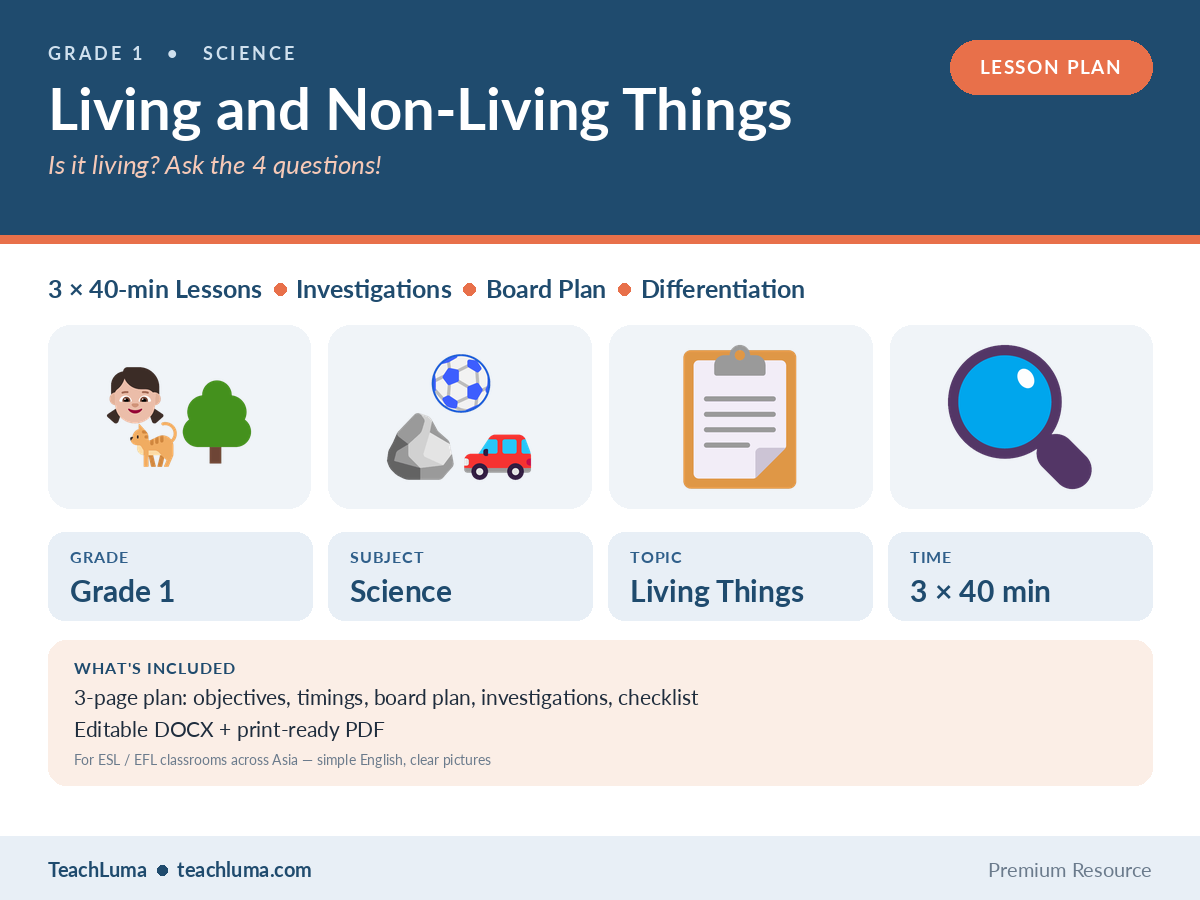
- Say that people, animals and plants are living things, and name 3 non-living things.
- Sort pictures into living and non-living and say why: "A cat is living. It grows."
- Say what living things need: food, water and air (plants also need sunlight).
- Use the 4 checks: Does it grow? Does it need food and water? Does it need air? Can it have babies or make seeds?
- Explain that moving is not enough: "A car moves, but it is non-living."
- Observe that a seed is living: in the Seed or Pebble? test, the seeds grow and the pebbles do not.
How to Use This Resource
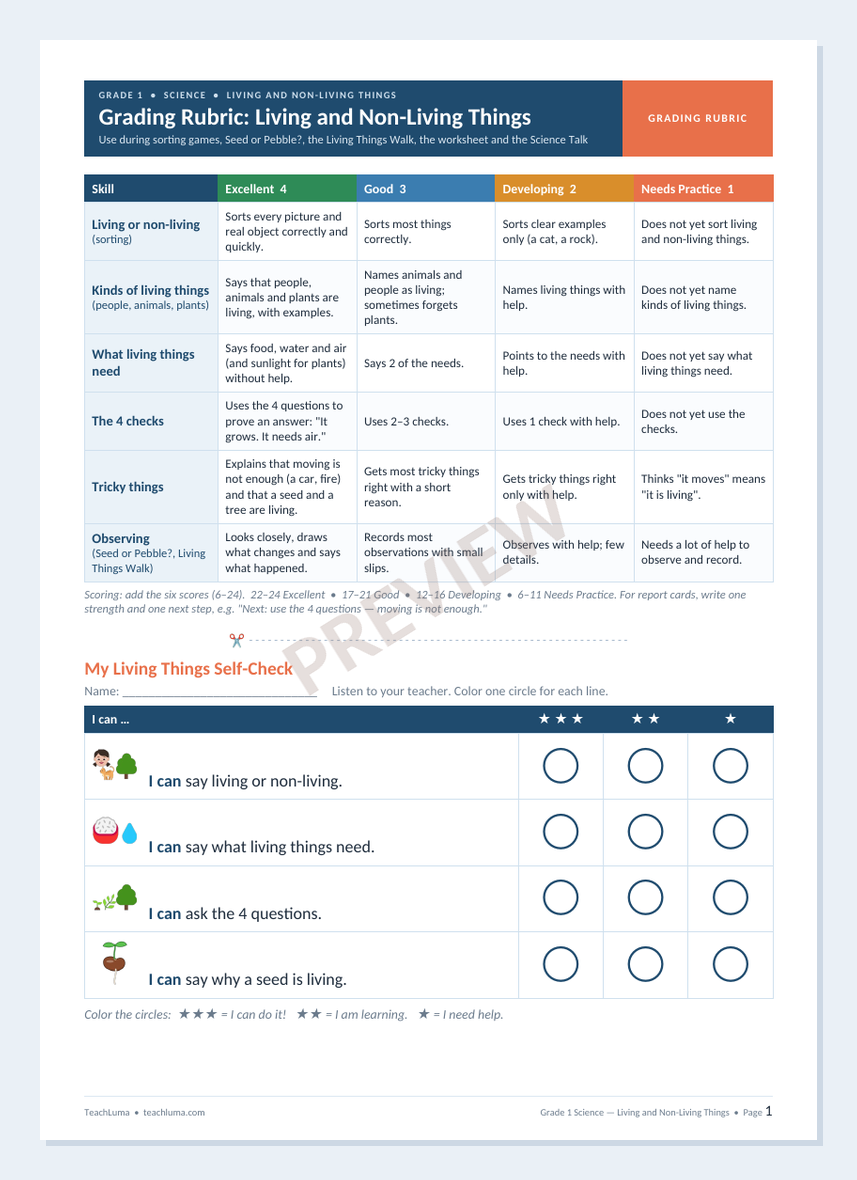
- Keep one copy per class on a clipboard. Score children during Grow or Sit, the Living Things Walk, Seed or Pebble?, the sort and exit questions. Children color the self-check at the end of the unit.
Classroom Activity Ideas
- Use the self-check in the review lesson with thumbs up / sideways / down first.
- Write one strength and one next step for report cards.
Differentiation
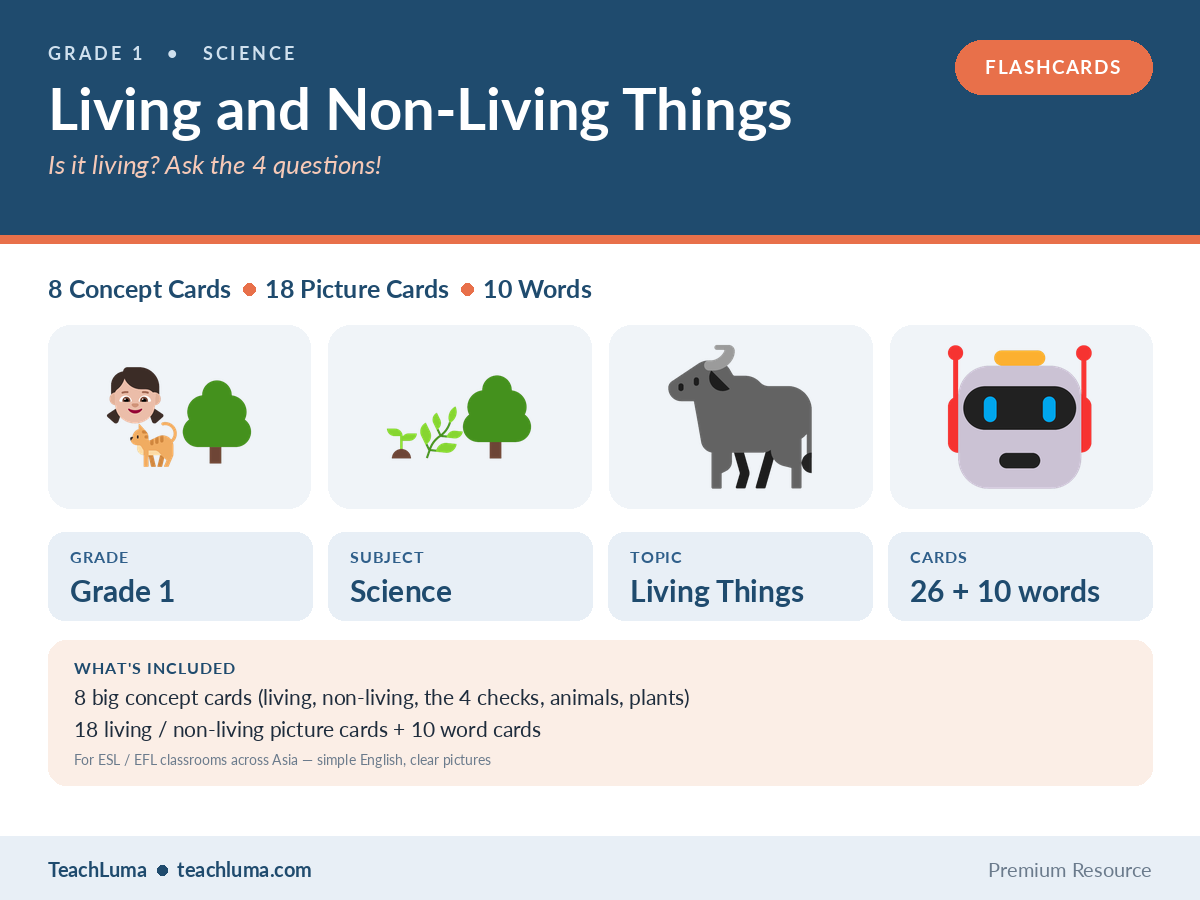
Support: Use only clear examples (a cat, a tree, a rock, a ball) and hold up a real plant and a real stone. Teach two checks first ("Does it grow?" "Does it need food and water?"), then add air and babies or seeds. Accept one word ("Living!"), then model the full sentence ("A cat is living. It grows.") for the child to repeat. Let children point instead of writing in Parts D and F, and give the word bank (living / non-living) for every writing task.
Extension: Children explain the tricky things (a car, a cloud, fire and a toy robot move but are non-living; a seed and a tree are living), and use all 4 checks to prove an answer. They meet a new idea: some things were living (a dry leaf, a wooden chair, a feather); they came from a living thing. Children make a "Living or not?" riddle for a partner ("I grow. I need water. I make seeds. I cannot walk. What am I?") and keep the Seed or Pebble? diary with a drawing every day.
Assessment
Add the six scores (6–24): 22–24 Excellent, 17–21 Good, 12–16 Developing, 6–11 Needs Practice.
Teacher Tips
Start the Seed or Pebble? investigation at the end of Lesson 1, because it needs time. Put 5 dry mung beans (green beans from any market) on wet paper towel in one clear cup, and 5 small pebbles on wet paper towel in another cup. Ask: "Which one is living?" Most children cannot tell; they look the same. In 1–2 days the mung beans crack open and grow a white root, and the pebbles do not change. This is the moment children understand that "living" means "can grow", not "can move". Use the same idea with the teddy bear and the rabbit on Worksheet Part E: the teddy bear looks like an animal, but when you check (grow? food and water? air? babies?) every answer is No.
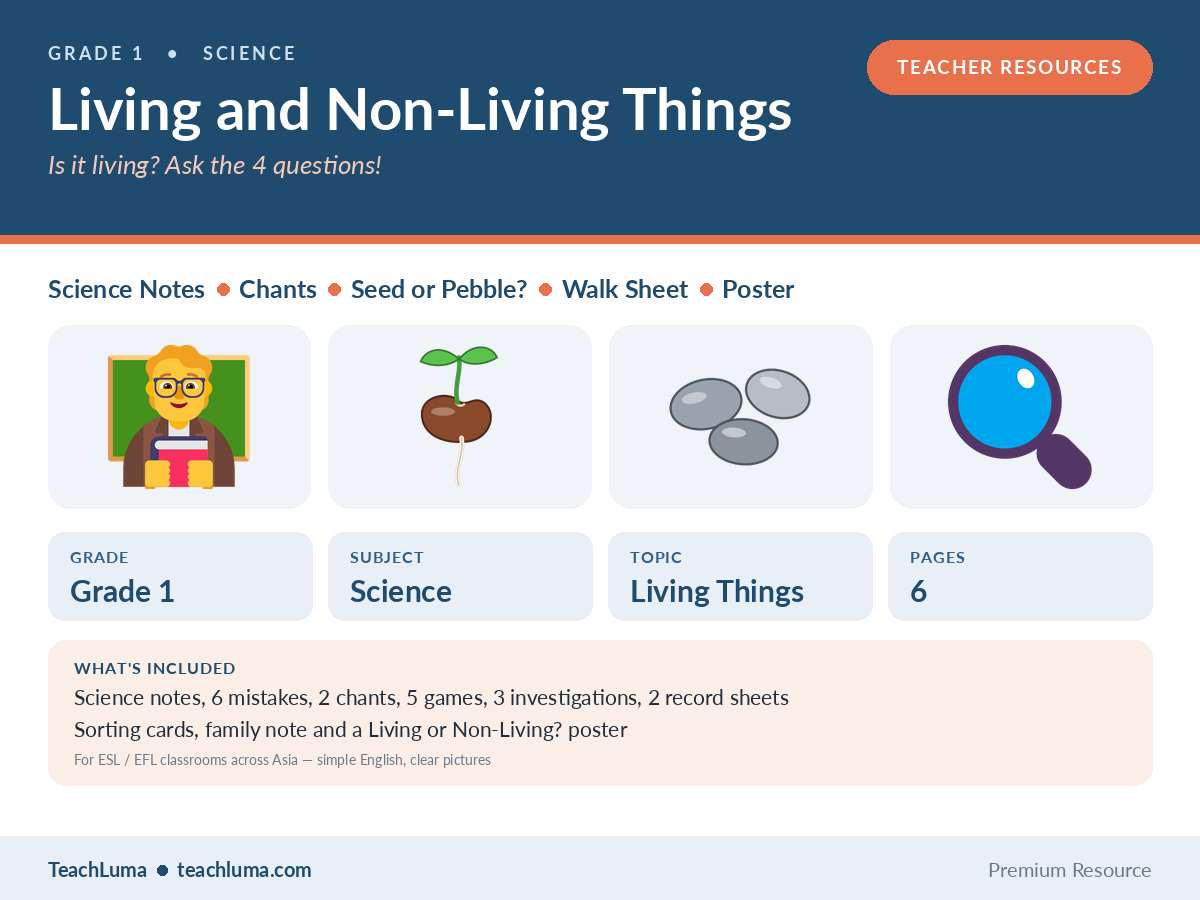
What's Included
- Grading rubric with self-check, 1 page (DOCX + PDF)
Additional Files