Grade 6 Science Assessment: Cells — The Building Blocks of Life
A 25-point, 4-section formal assessment covering cell theory, cell part functions, diagram...
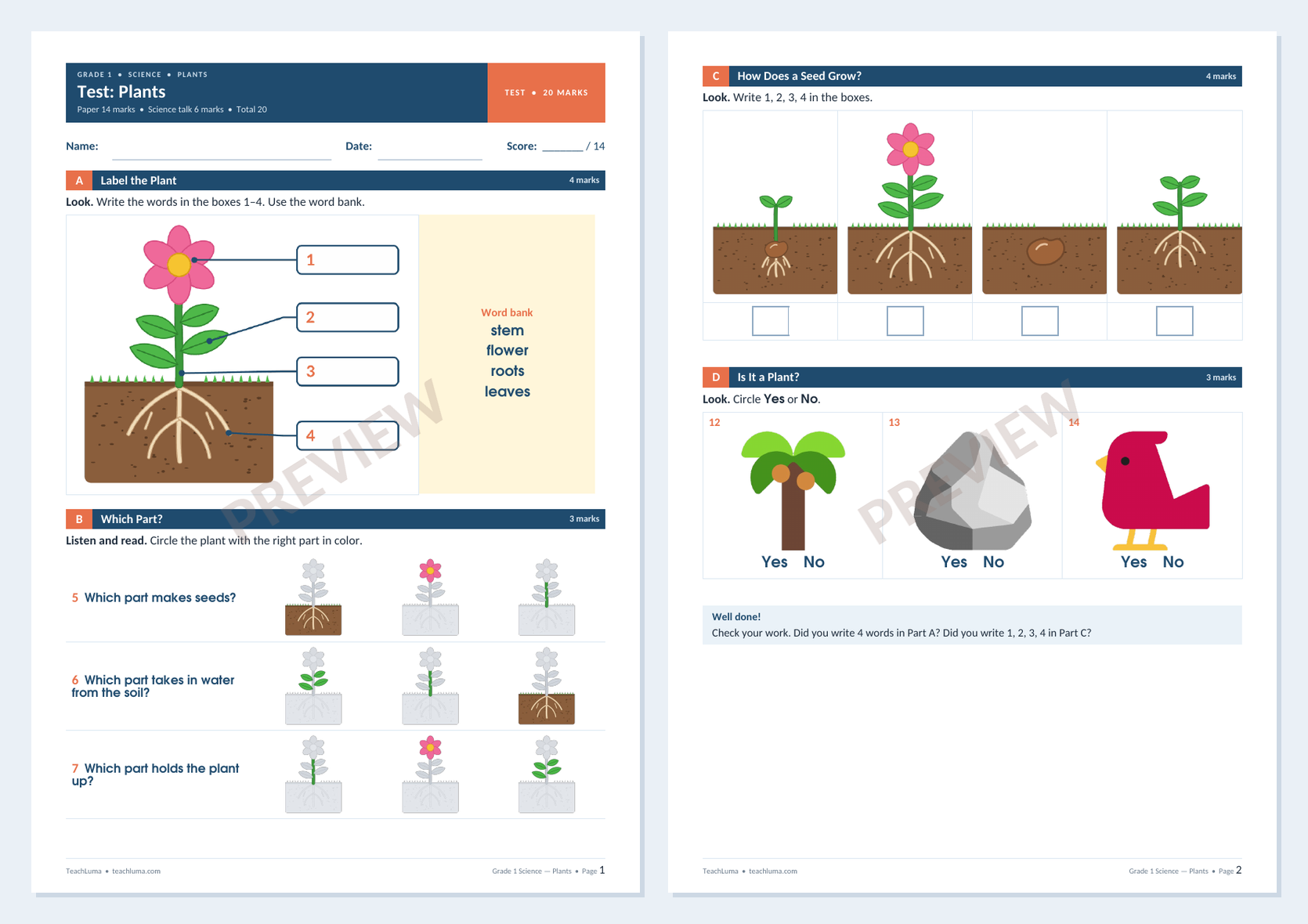
View Resource : Grade 6 Science Assessment: Cells — The Building Blocks of LifeA 20-mark end-of-unit test: a 14-mark paper (label the plant, which part?, how does a seed grow?, is it a plant?) and a 6-mark one-to-one science talk with a Show-Me Card, a class record sheet and a full answer key.
This pack teaches Grade 1 children what a plant is and how it grows, in simple English that young ESL learners can use straight away. Children learn that a plant is a living thing, name the 4 main parts (roots, stem, leaves, flower) and say one job for each ("The roots take in water."), name the 4 things a plant needs (water, sunlight, air and soil), put 4 pictures in order to show how a seed grows (seed, sprout, small plant, big plant), sort plants and not plants, and find the plant parts we eat (a carrot is a root, corn and rice are seeds). Real science is at the centre: children grow beans in clear cups and see the roots come out (Bean Plant Diary), test what happens to a plant with no water or no light, and watch colored water go up a stem. Every picture is drawn for this pack in one clear style — the whole plant is shown with the part being taught in color, so children always see where the part is. This listing covers the Test only.
Members Only
Upgrade to Teacher Pro (from ฿199/month) to download this resource.
Looking for something different? Request a Resource.
The answer key gives every paper answer, a 0/1/2 guide for each science talk item, what to accept, and grade bands (18–20, 14–17, 10–13, 0–9).
Support: Teach the 4 parts first and add seeds and fruit later. Point to a real plant (or the flashcards) and let children touch each part as they say the word. Accept one word ("Roots!"), then model the full sentence ("The roots take in water.") for them to repeat. Give a word bank for every writing task, and let children point to pictures instead of writing in Parts B and C. Pair a weaker child with a stronger child for the Bean Plant Diary drawings.
Extension: Children explain more jobs ("The stem carries water to the leaves."), label seeds and fruit as well, and add a 5th stage to the seed pictures: the flower makes a fruit with new seeds inside. They predict what will happen to the plant with no water and the plant in the dark ("I think it will …") and check the prediction after one week. They draw a plant from the school garden and label 4–6 parts without the word bank.
Start a Bean Plant Diary in Lesson 1 and keep it on the window sill for the whole unit. Put 2–3 dry beans (mung beans or kidney beans) between wet paper towel and the side of a clear plastic cup. In 2–4 days children can SEE the root come out first and grow down, then the shoot grow up — the same "seed → sprout" pictures they meet in Lesson 3, but real. Every morning, one child gives the plant a little water and says "Our plant needs water!" Children who have only seen plants in pots often think the roots are not part of the plant; the clear cup shows them roots are real and important.
No ratings yet
Be the first teacher to review this resource.
A 25-point, 4-section formal assessment covering cell theory, cell part functions, diagram...
View Resource : Grade 6 Science Assessment: Cells — The Building Blocks of LifeA 4-level rubric (Excellent / Good / Developing / Needs Practice) for scoring diagram labe...
View Resource : Grade 6 Science Grading Rubric: Cells — The Building Blocks of LifeA 31-point quiz covering the full Ecosystems and Habitats topic, with multiple choice, fil...
View Resource : Grade 5 Ecosystems and Habitats QuizA teacher assessment tool for evaluating student understanding of the water cycle across f...
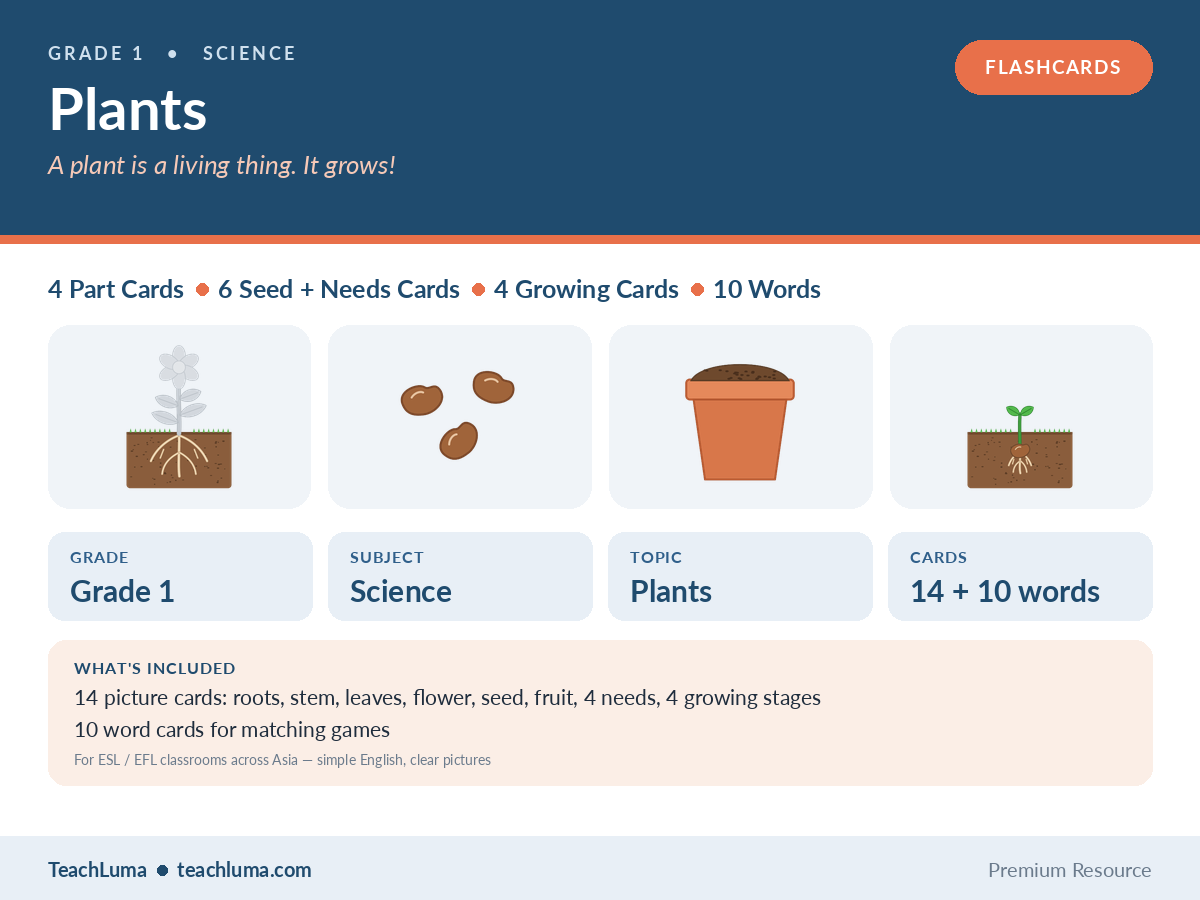
View Resource : Grade 4 The Water Cycle Grading Rubric14 large picture cards — roots, stem, leaves, flower (each shown on a whole plant), seed, ...
View Resource : Grade 1 Science Flashcards: Plants — Parts, Needs and Seed to Plant (14 Cards + Word Cards)A complete, classroom-ready complete lesson pack for Grade 1 Science: Living and Non-Livin...
View Resource : Living and Non-Living Things — Sorting PackAdvertisement