Skip to content
Preview
Free Science Worksheet Grade 1 (Year 2)
No ratings yet

Where Did the Snowman Go? Melting Ice and Snow

About This Resource

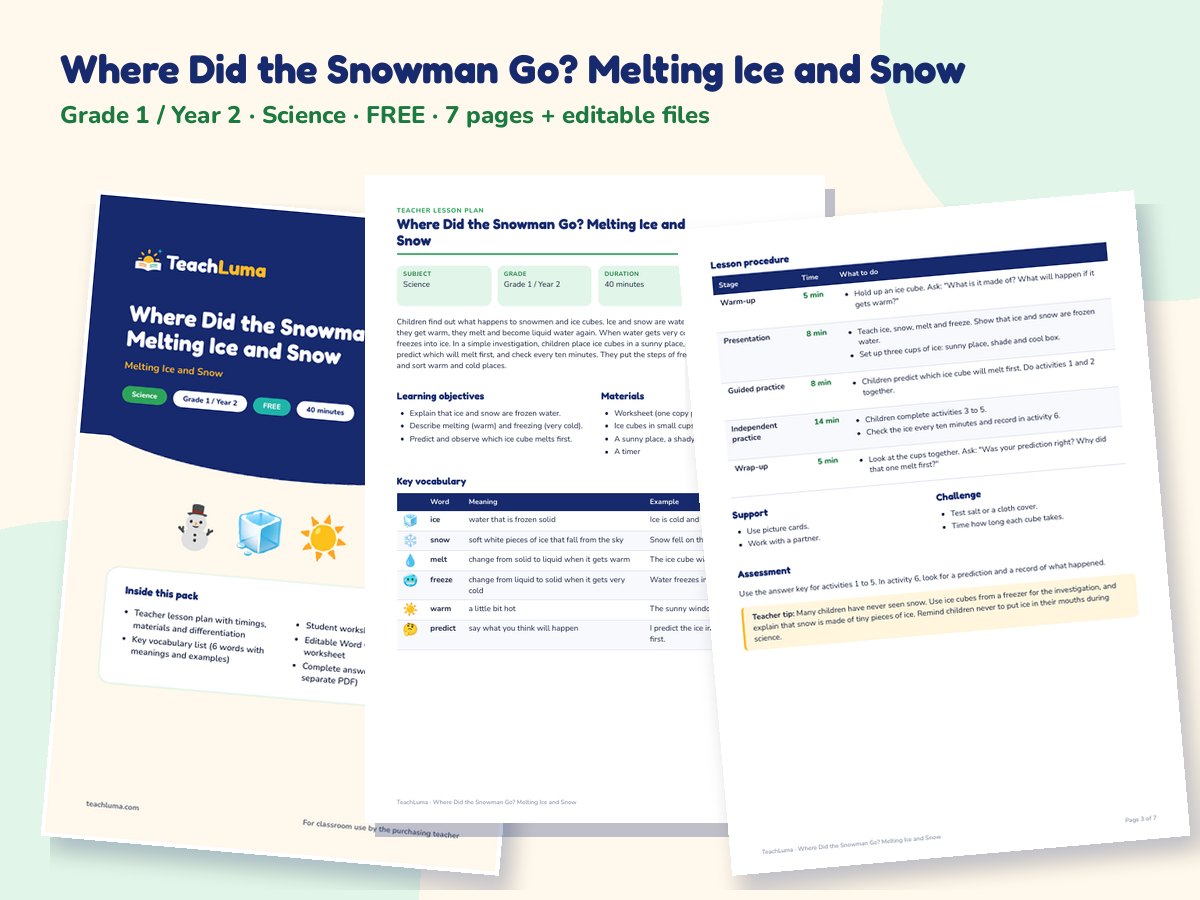
A free Grade 1 science worksheet on melting and freezing: ice and snow are frozen water, they melt into water when they get warm, and water freezes into ice when it gets very cold. Children predict where an ice cube will melt fastest, observe and record, put the water cycle of an ice cube in order and sort warm and cold places. Includes a timed lesson plan, a six-activity worksheet, an editable Word version and answer key.

Overview

Children find out what happens to snowmen and ice cubes. Ice and snow are water that is frozen solid. When they get warm, they melt and become liquid water again. When water gets very cold, for example in a freezer, it freezes into ice. In a simple investigation, children place ice cubes in a sunny place, in the shade and in a cool box, predict which will melt first, and check every ten minutes. They put the steps of freezing and melting in order and sort warm and cold places.

Resource Details

Subject
Science
Topic
Melting Ice and Snow
Category
Materials & Matter
File Type
PDF
File Size
224 KB
Published
11 Nov 2026
Downloads
1
Download

Free download — no account required.

Teaching this in class? Try our free Random Name Picker & Timer.

Share:

Looking for something different? Request a Resource.

Grade 1 science (ages 6–7) 40 minutes Physical science predicting observing recording sorting

Student Task

  • Hold up an ice cube. Ask: "What is it made of? What will happen if I hold it in my hand?"
  • Set up the ice cube test, then do activities 1 and 2 together.
  • Children complete activities 3 to 6 while they check the ice cubes. Answers are in the answer key.

Classroom Use

  • Ice cube race: place ice cubes in a sunny place, in the shade and in a cool box, and check every ten minutes.
  • Warm hands: children hold an ice cube in a cup in their hands and see that it melts faster.
  • Freeze it: freeze water in a cup overnight and look at it the next morning.

Differentiation

Support: use picture cards for sunny, shady and cold places. Challenge: children test whether salt or a cloth cover changes how fast ice melts.

Answer Key & Assessment

Activities 1 to 5 check melting and freezing (answer key included). Activity 6 shows whether children can predict and record what they observe.

Learning Objectives

  • Explain that ice and snow are frozen water.
  • Describe melting (warm) and freezing (very cold).
  • Predict and observe which ice cube melts first.

Teacher Tips

Many children have never seen snow. Use ice cubes from a freezer for the investigation, and explain that snow is made of tiny pieces of ice. Remind children never to put ice in their mouths during science.

What's Included

  • 7-page printable PDF lesson pack: teacher lesson plan with timings, materials and differentiation
  • Key vocabulary list (6 words with meanings and examples)
  • Student worksheet (6 activities)
  • Editable Word version of the worksheet
  • Complete answer key (also as a separate PDF)

Additional Files


Teacher Reviews

No ratings yet

Be the first teacher to review this resource.

Sign in to review this resource.

Related Resources

Advertisement