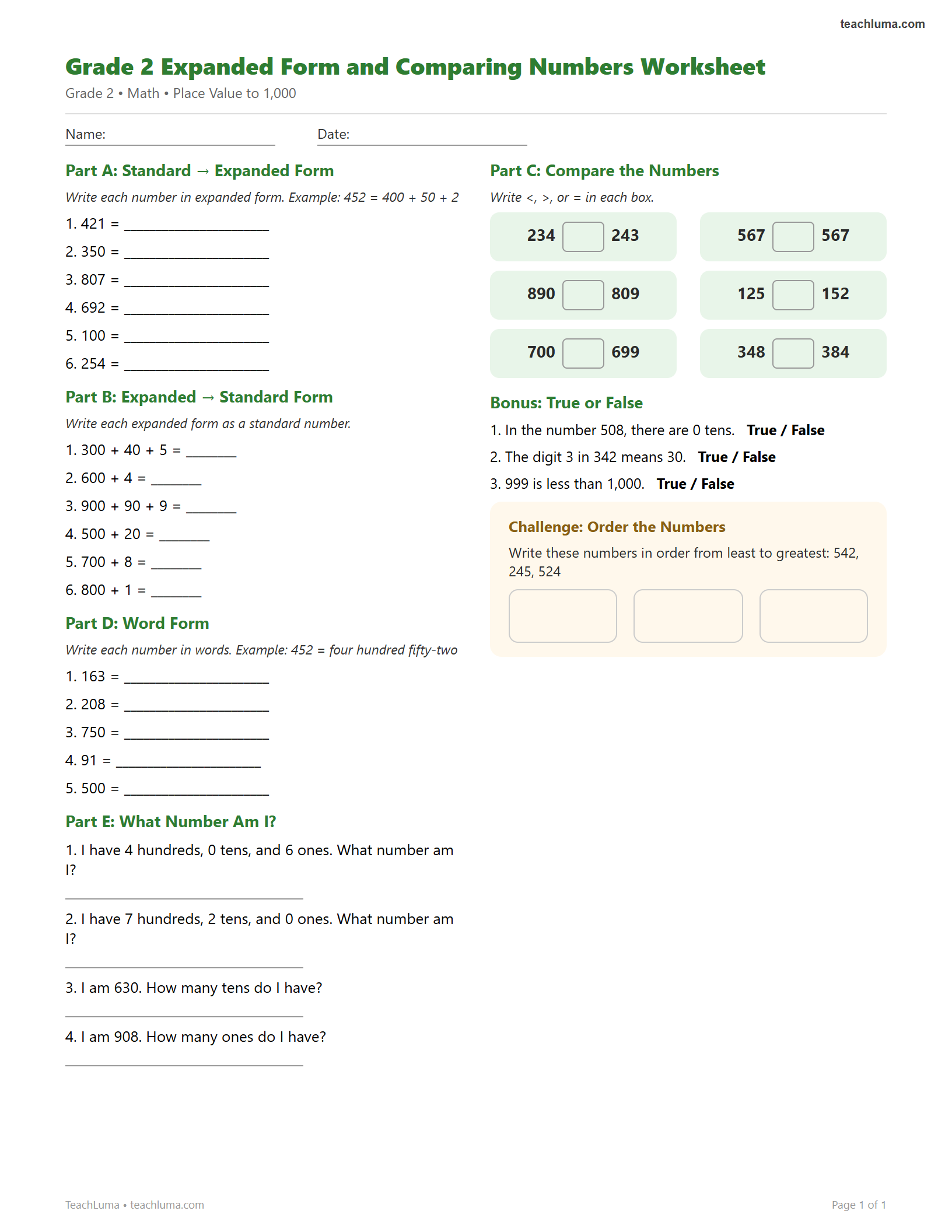
Grade 2 Expanded Form and Comparing Numbers Worksheet
About This Resource
A one-page worksheet covering all three ways to represent a number (standard, expanded, word form) plus comparing numbers with , =, a true/false bonus, and a "What Number Am I?" riddle section — five short sections in total, each testing a distinct place value skill.
Resource Details
- Subject
- Math
- Topic
- Expanded Form and Comparing Numbers
- Category
- Numbers & Counting
- File Type
- File Size
- 78.6 KB
- Published
- 18 Sep 2026
- Downloads
- 0
Free download — no account required.
Teaching this in class? Try our free Random Name Picker & Timer.
Student Task
- Use after the Base-Ten Blocks Worksheet, once students are comfortable with the hundreds/tens/ones breakdown. This worksheet moves from block-based thinking to purely numeric/symbolic representation (expanded form, word form, comparison symbols) — a natural next step in abstraction.
Classroom Use
- After grading, have students who missed the Bonus True/False item 2 explain out loud what the 3 in 342 actually means, using a base-ten block diagram from the previous worksheet as a visual reference.
Differentiation
SUPPORT: Complete Part C (comparing) as a whole-class activity first, explicitly modeling "compare hundreds first," before assigning Parts A, B, D, and E independently.
ON-LEVEL: Completes all sections independently.
CHALLENGE: For 2 items in Part E, also write the number's expanded form and word form, tying the riddle answer back to the other three sections on the page.
Answer Key & Assessment
Score Part A out of 6, Part B out of 6, Part D out of 5, Part E out of 4, Part C out of 6, and the Bonus out of 3. Assess the Challenge (ordering 3 numbers) as correct/incorrect — there is exactly one correct order.
Learning Objectives
- Students will be able to convert a number between standard form, expanded form, and word form in either direction.
- Students will be able to compare two 3-digit numbers using , or = by reasoning about place value (hundreds first).
- Students will be able to identify a number from its place value description ("4 hundreds, 0 tens, 6 ones").
- Students will be able to evaluate true/false statements about what a digit's place value means.
Teacher Tips
Bonus True/False item 2 ("The digit 3 in 342 means 30") is deliberately FALSE and is the single most diagnostic item on the page — a student who marks it True has not yet separated "digit" from "place value," even if they can correctly complete Parts A-C mechanically.
What's Included
- 1-page worksheet, 5 distinct sections (DOCX + PDF)
- Editable DOCX version
- Print-ready PDF version
- Separate answer key (DOCX + PDF)
- 1 preview image
Additional Files
Teacher Reviews
No ratings yet
Be the first teacher to review this resource.
Related Resources
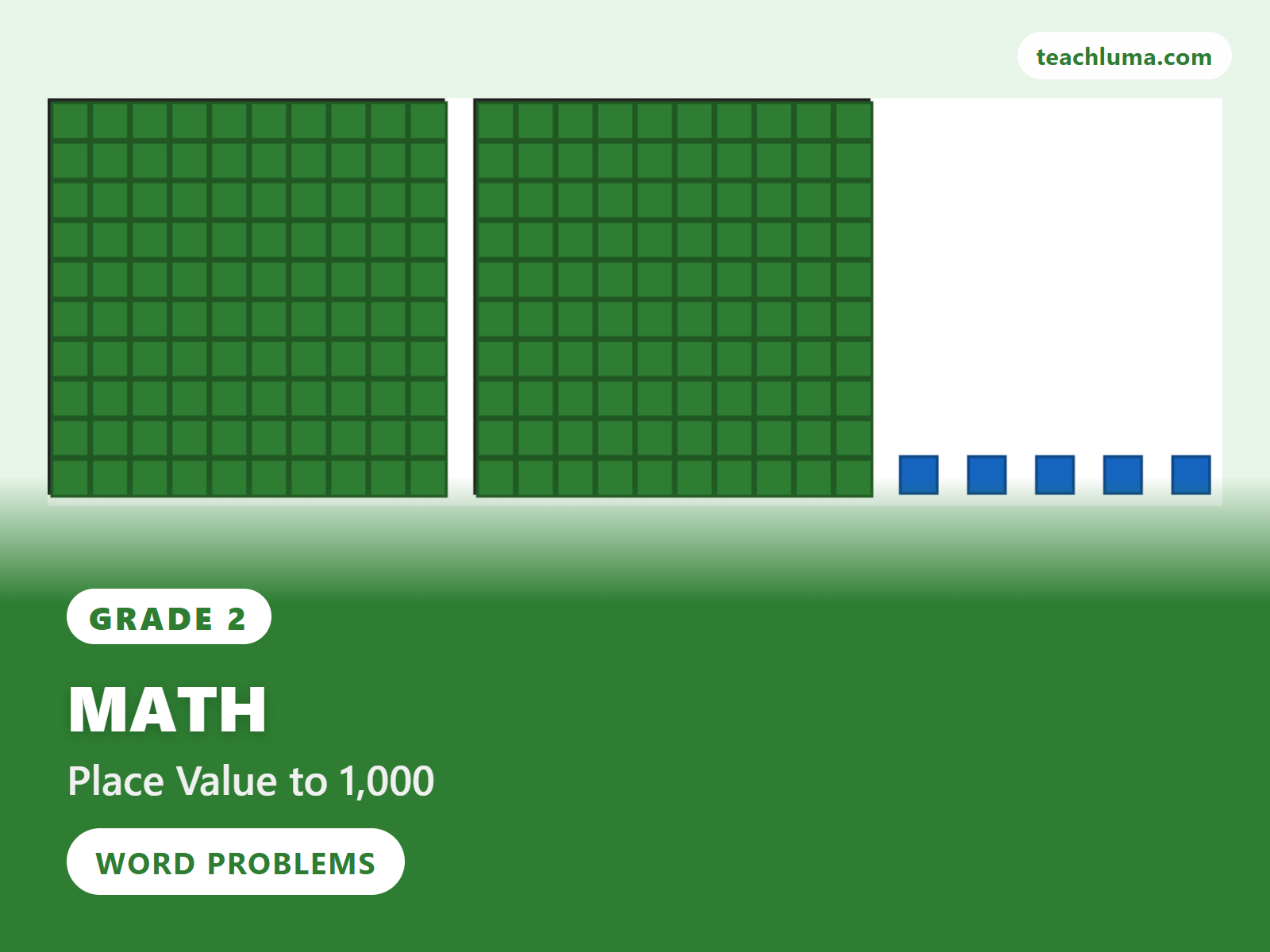
Grade 2 Place Value Word Problems
Worksheet · Place Value Word Problems
A one-page word problems activity built around an original scenario ("The School Supply Dr...
View Resource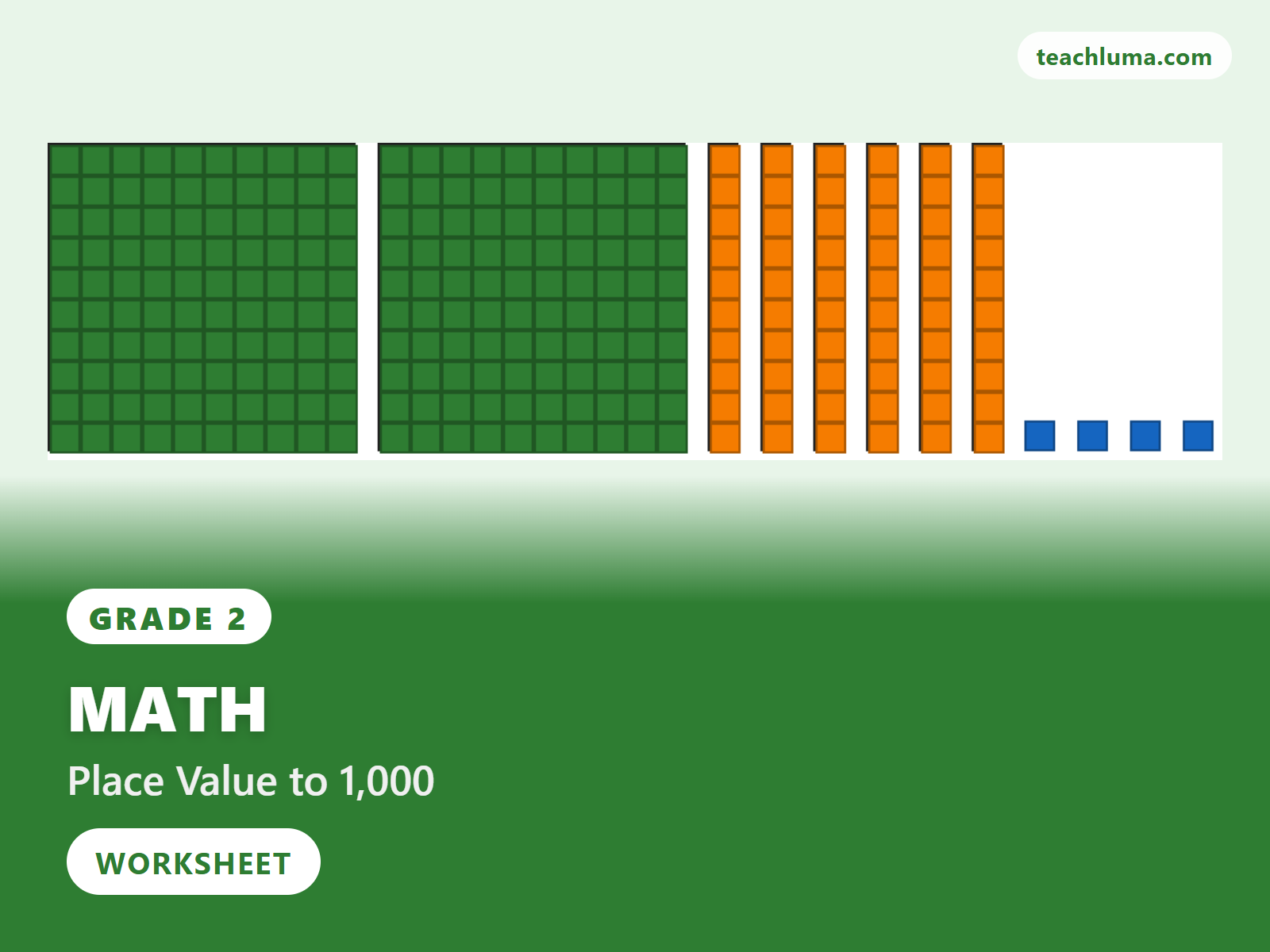
Grade 2 Base-Ten Blocks Worksheet
Worksheet · Base-Ten Blocks
A one-page worksheet practicing place value through reading base-ten block diagrams (Part ...
View Resource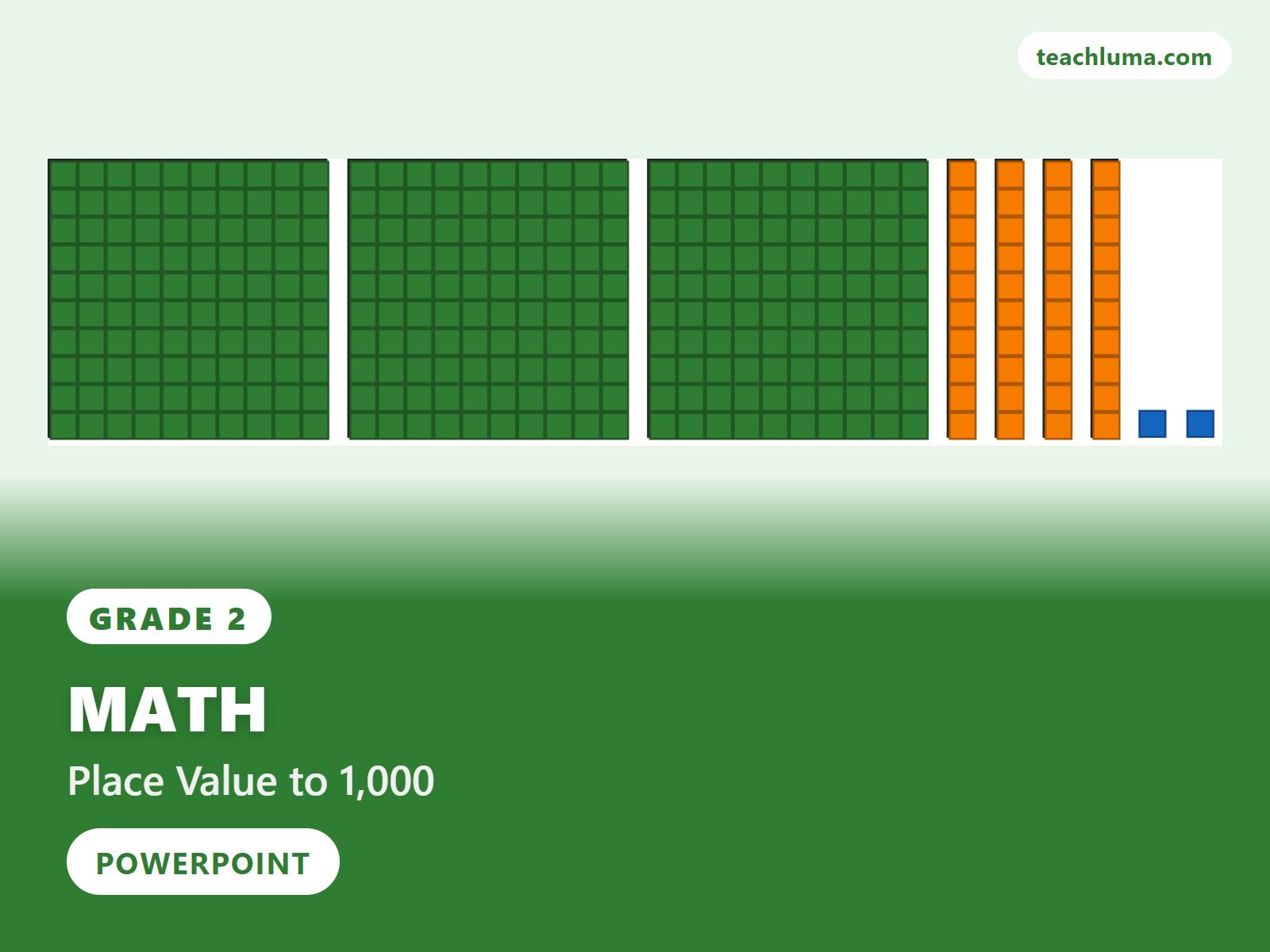
Grade 2 Place Value to 1,000 Vocabulary PowerPoint
PowerPoint · Place Value to 1,000
A 15-slide introduction to place value up to 1,000 using base-ten block diagrams (hundred ...
View Resource
Grade 2 Multiplying Two-Digit Numbers by Single-Digit Numbers Worksheet
Worksheet · Multiplying Two-Digit Numbers by Single-Digit Numbers
A two-page worksheet that teaches the break-apart (partitioning) method for multiplying a ...
View Resource
Grade 2 Multiplying by Repeated Addition Worksheet
Worksheet · Multiplying by Repeated Addition
A two-page worksheet that introduces multiplication as a fast way to add equal groups. Stu...
View Resource
Grade 2 Multiplying and Dividing by 6, 7, 8 and 9 Worksheet
Worksheet · Multiplying and Dividing by 6, 7, 8 and 9
A two-page worksheet covering the four hardest times tables — 6, 7, 8, and 9 — plus their ...
View ResourceAdvertisement