Skip to content
Preview
Free Science Worksheet Grade 4 (Year 5)
No ratings yet

Hot, Cold, Wet, Dry: Climate Zones of the World

About This Resource

A free Grade 4 science worksheet on the world's main climate zones: polar, temperate, tropical, desert (dry) and mountain. Students learn the difference between weather and climate, describe each zone, explain why places near the equator are warmer than places near the poles, match animals and plants to zones and describe the climate where they live. Includes a timed lesson plan, a six-activity worksheet, an editable Word version and answer key.

Overview

Weather is what the air is like today; climate is the usual weather of a place over many years. Places near the equator get the most direct sunlight, so tropical zones are hot all year, and many are very wet. Places near the poles get weak, slanting sunlight, so polar zones are cold. Temperate zones, between them, have warm summers and cool winters. Deserts get very little rain, and mountains get colder the higher you go. Students read short descriptions, match zones with features, plants and animals, and finish by describing the climate of their own home town.

Resource Details

Subject
Science
Topic
Climate Zones of the World
Category
Weather & Seasons
File Type
PDF
File Size
217.8 KB
Published
13 Nov 2026
Downloads
0
Download Free

Free with a TeachLuma account — it takes a minute.

Share:

Looking for something different? Request a Resource.

Grade 4 science (ages 9–10) 45 minutes Earth science reading maps comparing explaining

Student Task

  • Ask: "What is the weather like today? Is it like this all year?" Explain weather and climate.
  • Show a world map with the equator and the poles, then do activities 1 and 2 together.
  • Students complete activities 3 to 6. Answers are in the answer key.

Classroom Use

  • Flashlight test: shine a flashlight straight down and at a slant on paper to show why the poles get weaker sunlight.
  • Zone postcards: students write a postcard from a place in one climate zone.
  • Map coloring: students color the main climate zones on a simple world map.

Differentiation

Support: give a word bank and focus on polar, temperate and tropical. Challenge: students explain why a city near the equator can be cool if it is high in the mountains.

Answer Key & Assessment

Activities 1 to 5 check climate zones (answer key included). Activity 6 shows whether students can describe a real climate.

Learning Objectives

  • Explain the difference between weather and climate.
  • Describe the main climate zones of the world.
  • Explain why places near the equator are warmer than places near the poles.

Teacher Tips

Climate zones are simplified here; real maps show many smaller zones. Encourage students to connect the zones with places they know, including their own country, and avoid stereotypes about how people live in different climates.

What's Included

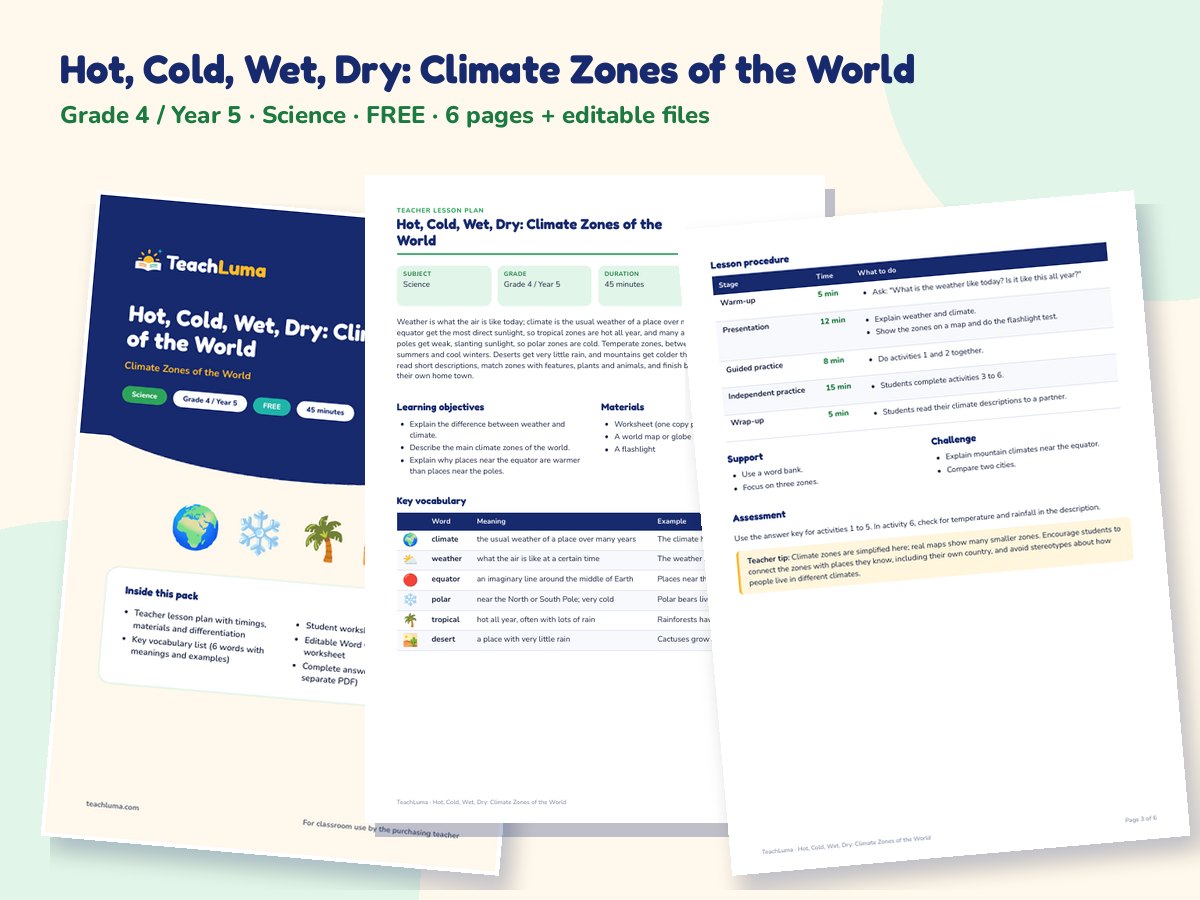
  • 6-page printable PDF lesson pack: teacher lesson plan with timings, materials and differentiation
  • Key vocabulary list (6 words with meanings and examples)
  • Student worksheet (6 activities)
  • Editable Word version of the worksheet
  • Complete answer key (also as a separate PDF)

Additional Files


Teacher Reviews

No ratings yet

Be the first teacher to review this resource.

Sign in to review this resource.

Related Resources

Advertisement