Skip to content
Preview
Members Only Science Complete Lesson Pack Grade 5 (Year 6)
No ratings yet

Keep It Clean: Pollution and Its Effects

About This Resource

A complete Grade 5 science lesson pack on pollution: what pollution is, the main types (air, water, land, noise and light), where each type comes from, how pollution affects people, animals and plants, how scientists measure air quality, and practical ways to reduce pollution at home, at school and in the community. Includes slides, a timed lesson plan, flashcards, worksheet, quiz, homework, rubric and answer key.

Overview

Students learn that pollution happens when harmful substances or energy get into the air, water or land. They identify five types of pollution and their sources, such as vehicle exhaust, factory waste, plastic litter, farm chemicals, loud traffic and bright city lights. They trace how pollution moves through the environment (for example, from a street drain into a river and the sea), read about a river clean-up, interpret a week of air quality data and connect pollution to effects on health and wildlife. The lesson ends with students choosing solutions and planning a small action for their school.

Resource Details

Subject
Science
Topic
Pollution and Its Effects
Category
Earth & Space
File Type
PDF
File Size
358.7 KB
Published
04 Nov 2026
Downloads
0

Members Only

Upgrade to Teacher Pro (from ฿199/month) to download this resource.

Share:

Looking for something different? Request a Resource.

Grade 5 (ages 10–11) 50 minutes Environmental science classifying reading data cause and effect problem solving

Learning Objectives

  • Identify five types of pollution and their main sources.
  • Explain how pollution affects people, animals and plants.
  • Suggest and evaluate ways to reduce pollution, and read simple air quality data.

How to Use This Resource

  • Start with slide 1: show two photos of the same river, one clean and one full of litter, and ask what happened.
  • Teach the types of pollution, their sources and effects with the slides, then do activities 1 and 2 together.
  • Students complete activities 3 to 6, then use the quiz to check and the homework pollution audit. Answers are in the answer key.

Classroom Activity Ideas

  • Oil spill test: add a little cooking oil to a tray of water and try cleaning it with a sponge, a spoon and cotton balls.
  • Sticky air test: smear petroleum jelly on cards, place them in different places around the school for a day and compare the dust collected.
  • Litter count: groups collect and sort litter (using gloves) from part of the schoolyard and make a tally chart.

Differentiation

Support: give picture cards for each pollution type and a word bank, and focus on air, water and land. Challenge: research how plastic breaks into microplastics and how they enter food chains, and design a campaign to reduce single-use plastic at school.

Assessment

Worksheet activities and the quiz check pollution types, sources, effects and solutions (answer key included). The data questions, explanations and homework audit are checked with the rubric.

Teacher Tips

Connect every type of pollution to a choice students can make, so the lesson ends with action rather than worry. For safety, students should wear gloves for any litter collection and never touch broken glass or sharp objects.

What's Included

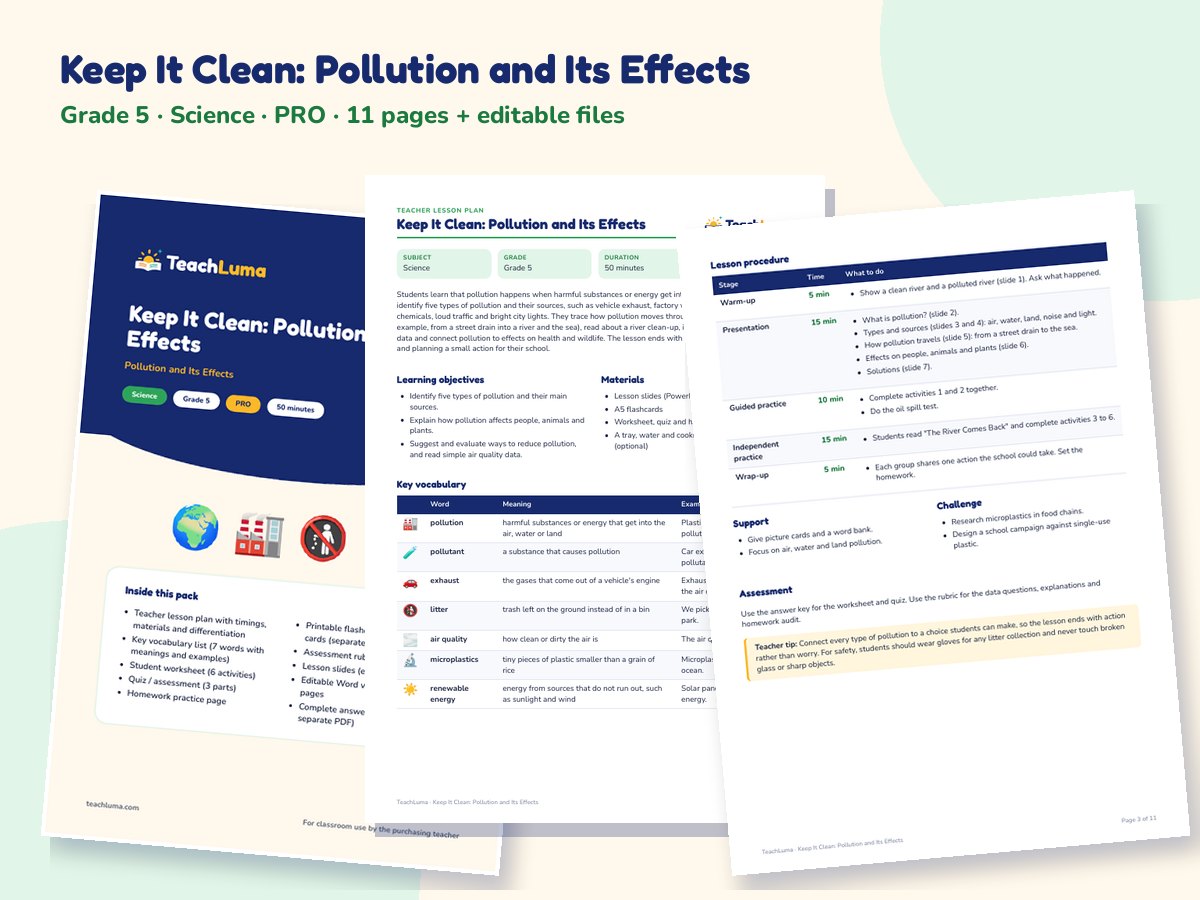
  • 11-page printable PDF lesson pack: teacher lesson plan with timings, materials and differentiation
  • Key vocabulary list (7 words with meanings and examples)
  • Student worksheet (6 activities)
  • Quiz / assessment (3 parts)
  • Homework practice page
  • Printable flashcards: 7 A5 picture cards (separate PDF)
  • Assessment rubric (4 levels)
  • Lesson slides (editable PowerPoint)
  • Editable Word version of all student pages
  • Complete answer key (also as a separate PDF)

Additional Files

  • Lesson Slides (PPTX)
  • Editable Student Pages and Lesson Plan (DOCX)
  • A5 Flashcards (PDF)
  • Answer Key (PDF)

Teacher Reviews

No ratings yet

Be the first teacher to review this resource.

Sign in to review this resource.

Related Resources

Advertisement