Skip to content
Preview
Free Science Worksheet Grade 5
No ratings yet

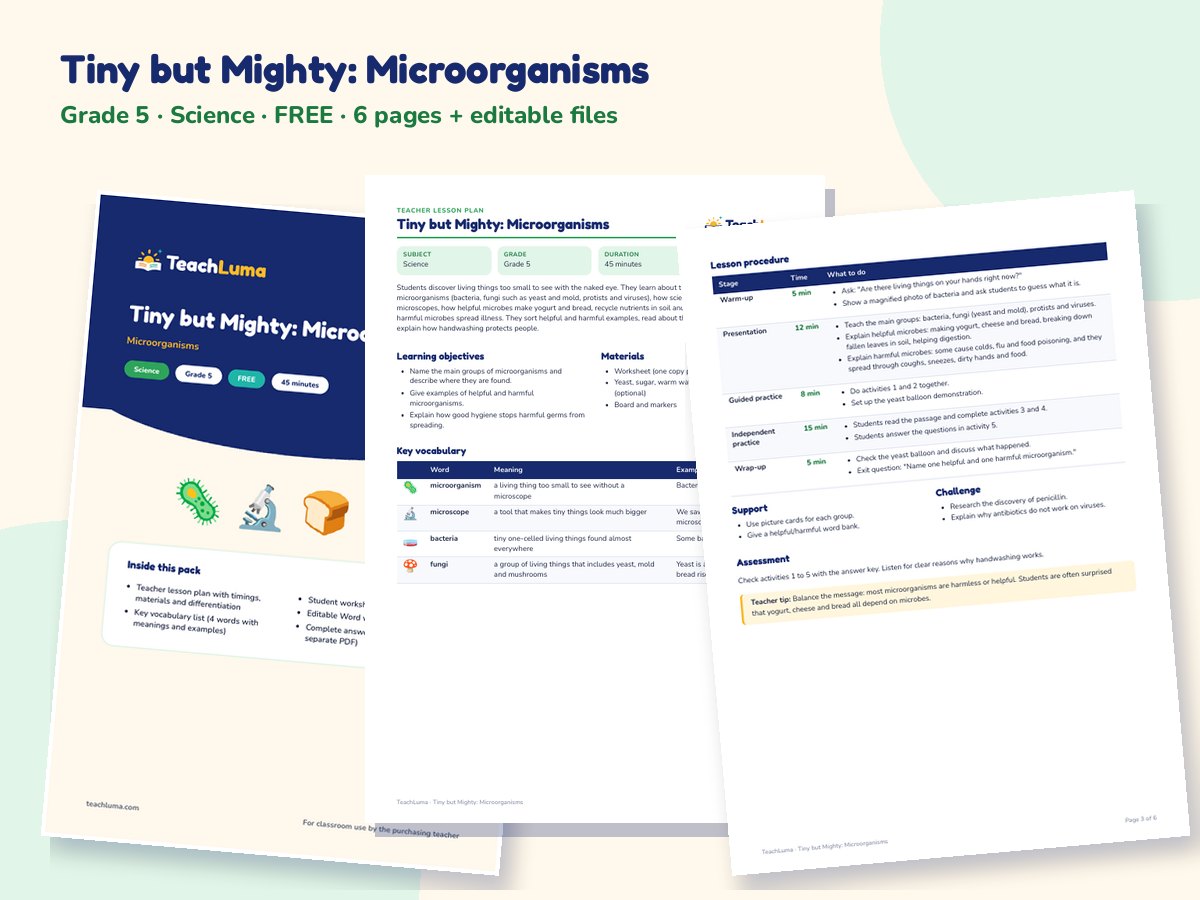
Tiny but Mighty: Microorganisms

About This Resource

A free Grade 5 science worksheet pack on microorganisms: bacteria, viruses, fungi and protists, using a microscope, helpful microbes in food, soil and our bodies, harmful microbes that cause illness, and simple ways to stop germs from spreading. Includes a timed lesson plan, worksheet, editable Word version and answer key.

Overview

Students discover living things too small to see with the naked eye. They learn about the main groups of microorganisms (bacteria, fungi such as yeast and mold, protists and viruses), how scientists see them with microscopes, how helpful microbes make yogurt and bread, recycle nutrients in soil and help digestion, and how harmful microbes spread illness. They sort helpful and harmful examples, read about the yeast balloon experiment and explain how handwashing protects people.

Resource Details

Subject
Science
Topic
Microorganisms
Category
Living Things
File Type
PDF
File Size
245.8 KB
Published
31 Oct 2026
Downloads
0
Download

Free download — no account required.

Teaching this in class? Try our free Random Name Picker & Timer.

Share:

Looking for something different? Request a Resource.


Grade 5 (ages 10–11) 45 minutes Life science classifying reading explaining health

Student Task

  • Show a photo of a microscope and ask: "What tiny living things might we see?"
  • Teach the key ideas, then do activities 1 and 2 together.
  • Students complete activities 3 to 5; answers are in the answer key.

Classroom Use

  • Yeast balloon: mix yeast, sugar and warm water in a bottle and stretch a balloon over the top; watch it inflate as the yeast makes gas.
  • Glitter germs: put glitter on one student's hands and see how far it spreads with handshakes, then wash it off.
  • Bread mold watch: seal a slice of damp bread in a bag (never open it) and observe mold growing over a week.

Differentiation

Support: use picture cards for each group and a helpful/harmful word bank. Challenge: research how penicillin was discovered from a mold.

Answer Key & Assessment

Activities 1 to 4 check groups and examples (answer key included). Activity 5 checks explanations about hygiene.

Learning Objectives

  • Name the main groups of microorganisms and describe where they are found.
  • Give examples of helpful and harmful microorganisms.
  • Explain how good hygiene stops harmful germs from spreading.

Teacher Tips

Balance the message: most microorganisms are harmless or helpful. Students are often surprised that yogurt, cheese and bread all depend on microbes.

What's Included

  • 6-page printable PDF lesson pack: teacher lesson plan with timings, materials and differentiation
  • Key vocabulary list (4 words with meanings and examples)
  • Student worksheet (5 activities)
  • Editable Word version of the worksheet
  • Complete answer key (also as a separate PDF)

Additional Files


Teacher Reviews

No ratings yet

Be the first teacher to review this resource.

Sign in to review this resource.

Related Resources

Advertisement