Skip to content
Preview
Members Only Science Complete Lesson Pack Grade 1 (Year 2)
No ratings yet

Who Lives Under a Log? Microhabitats

About This Resource

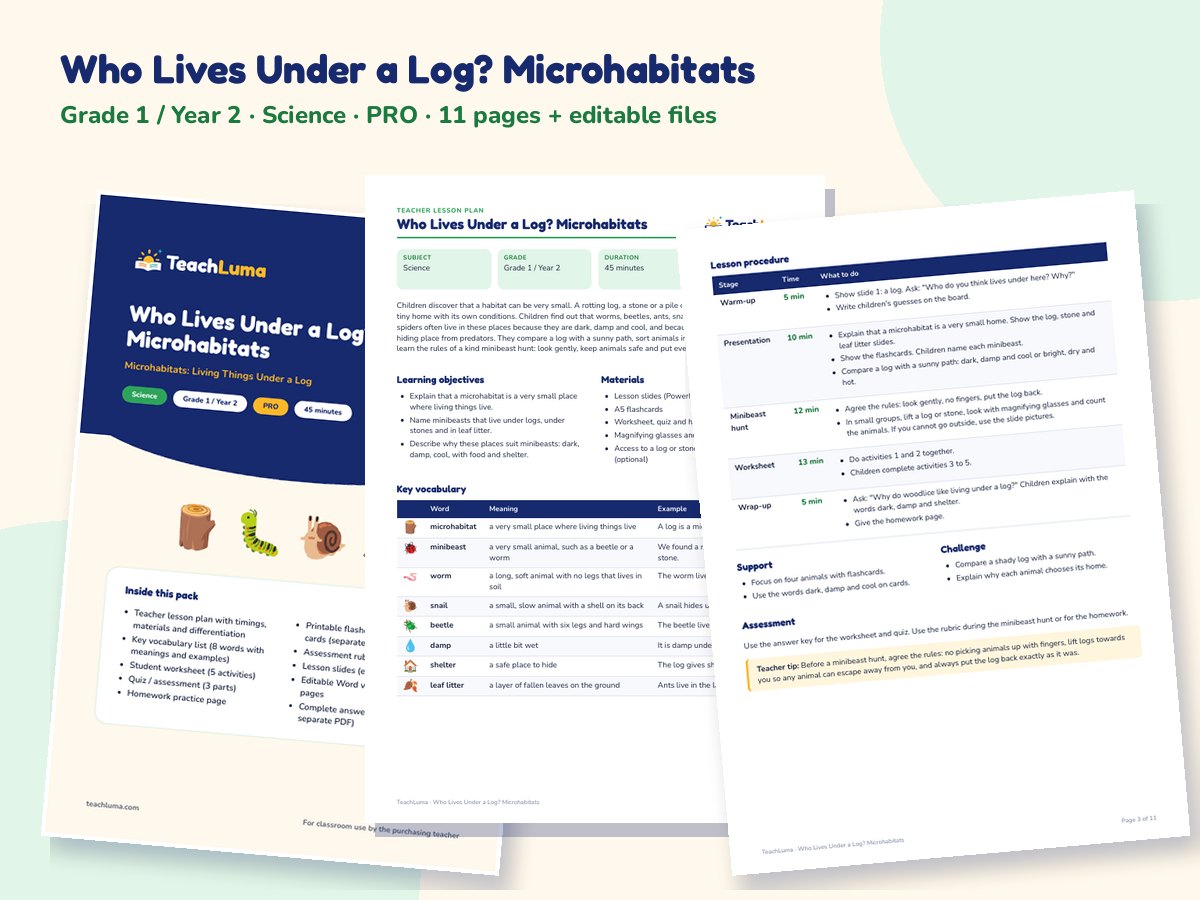
A complete Grade 1 science pack on microhabitats: the small, special places where tiny animals live, such as under a log, under a stone, in leaf litter and in the soil. Children learn which minibeasts (small animals) live there, why these places are dark, damp and cool, how a log gives food and shelter, and how to look for minibeasts carefully and kindly. Includes a lesson plan, worksheet, quiz, homework, A5 flashcards, a rubric, slides with speaker notes, Word files and answer keys.

Overview

Children discover that a habitat can be very small. A rotting log, a stone or a pile of leaves is a microhabitat: a tiny home with its own conditions. Children find out that worms, beetles, ants, snails, slugs, woodlice and spiders often live in these places because they are dark, damp and cool, and because they provide food and a hiding place from predators. They compare a log with a sunny path, sort animals into the places they live and learn the rules of a kind minibeast hunt: look gently, keep animals safe and put everything back where it was.

Resource Details

Subject
Science
Topic
Microhabitats: Living Things Under a Log
Category
Animals
File Type
PDF
File Size
357.1 KB
Published
08 Nov 2026
Downloads
0

Members Only

Upgrade to Teacher Pro (from ฿199/month) to download this resource.

Share:

Looking for something different? Request a Resource.

Grade 1 (ages 6–7) 45 minutes Life science observing sorting comparing caring for living things

Learning Objectives

  • Explain that a microhabitat is a very small place where living things live.
  • Name minibeasts that live under logs, under stones and in leaf litter.
  • Describe why these places suit minibeasts: dark, damp, cool, with food and shelter.

How to Use This Resource

  • Start with slide 1: a picture of a log. Ask: "Who do you think lives under here?"
  • Teach the ideas with the slides and flashcards, then do worksheet activities 1 and 2 together.
  • If possible, go on a short minibeast hunt in the school grounds, then complete activities 3 to 5, the quiz and the homework.

Classroom Activity Ideas

  • Minibeast hunt: carefully lift a log or stone in the school grounds, look closely, count the animals you see and gently put the log back.
  • Dark or light? Put a few woodlice or worms on a tray that is half covered with dark paper and watch where they move. Return them afterwards.
  • Build a bug hotel: stack sticks, leaves, pine cones and bark in a box or crate to make a new microhabitat.

Differentiation

Support: use the flashcards and focus on four animals (worm, snail, ant, beetle). Challenge: compare the number of animals found under a log in the shade with those found on a sunny path, and explain the difference.

Assessment

Use the worksheet and quiz to check animal names and the conditions of microhabitats. Use the rubric during the minibeast hunt or the homework drawing.

Teacher Tips

Before a minibeast hunt, agree the rules: no picking animals up with fingers, lift logs towards you so any animal can escape away from you, and always put the log back exactly as it was.

What's Included

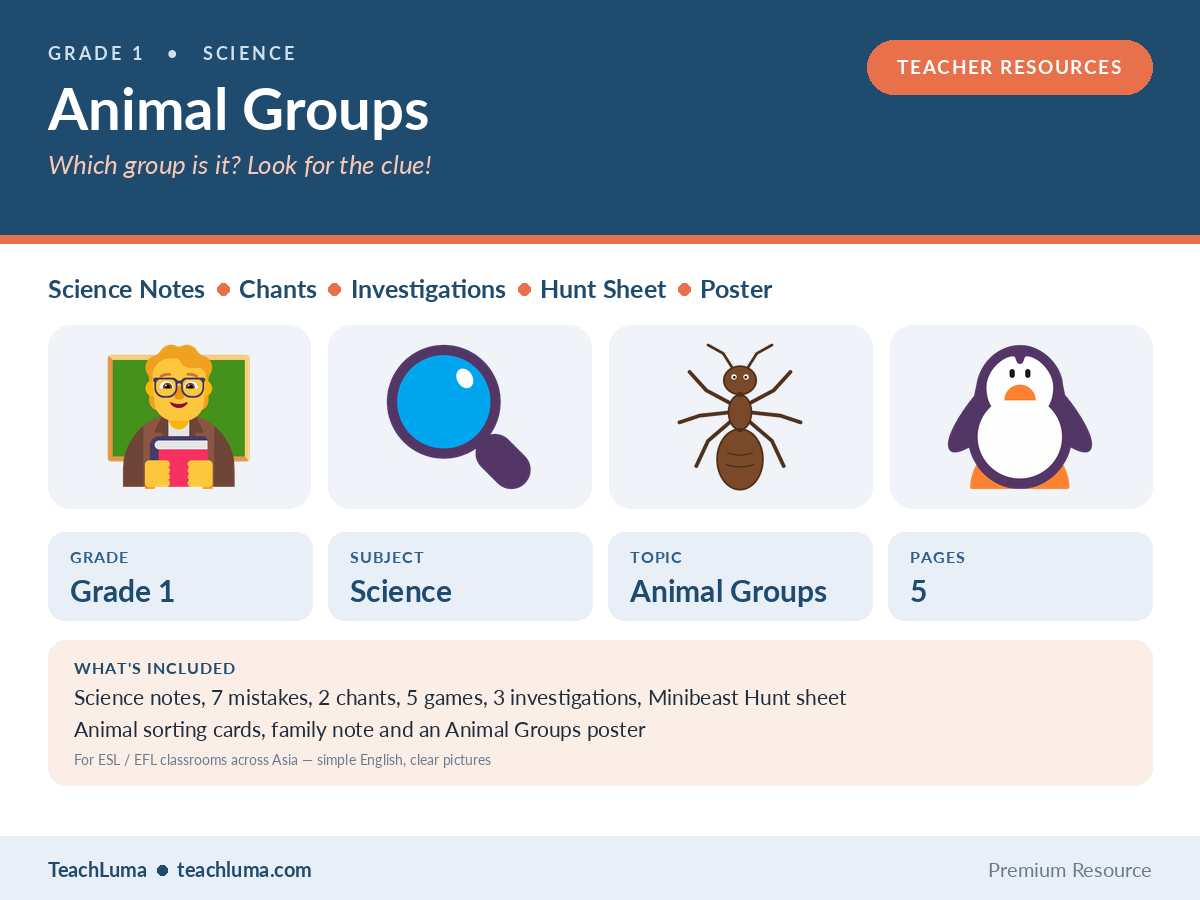
  • 11-page printable PDF lesson pack: teacher lesson plan with timings, materials and differentiation
  • Key vocabulary list (8 words with meanings and examples)
  • Student worksheet (5 activities)
  • Quiz / assessment (3 parts)
  • Homework practice page
  • Printable flashcards: 8 A5 picture cards (separate PDF)
  • Assessment rubric (4 levels)
  • Lesson slides (editable PowerPoint)
  • Editable Word version of all student pages
  • Complete answer key (also as a separate PDF)

Additional Files

  • Lesson Slides (PPTX)
  • Editable Student Pages and Lesson Plan (DOCX)
  • A5 Flashcards (PDF)
  • Answer Key (PDF)

Teacher Reviews

No ratings yet

Be the first teacher to review this resource.

Sign in to review this resource.

Related Resources

Advertisement