Skip to content
Preview
Free Science Worksheet Grade 3 (Year 4)
No ratings yet

Fill Your Plate: Food Groups and a Balanced Plate

About This Resource

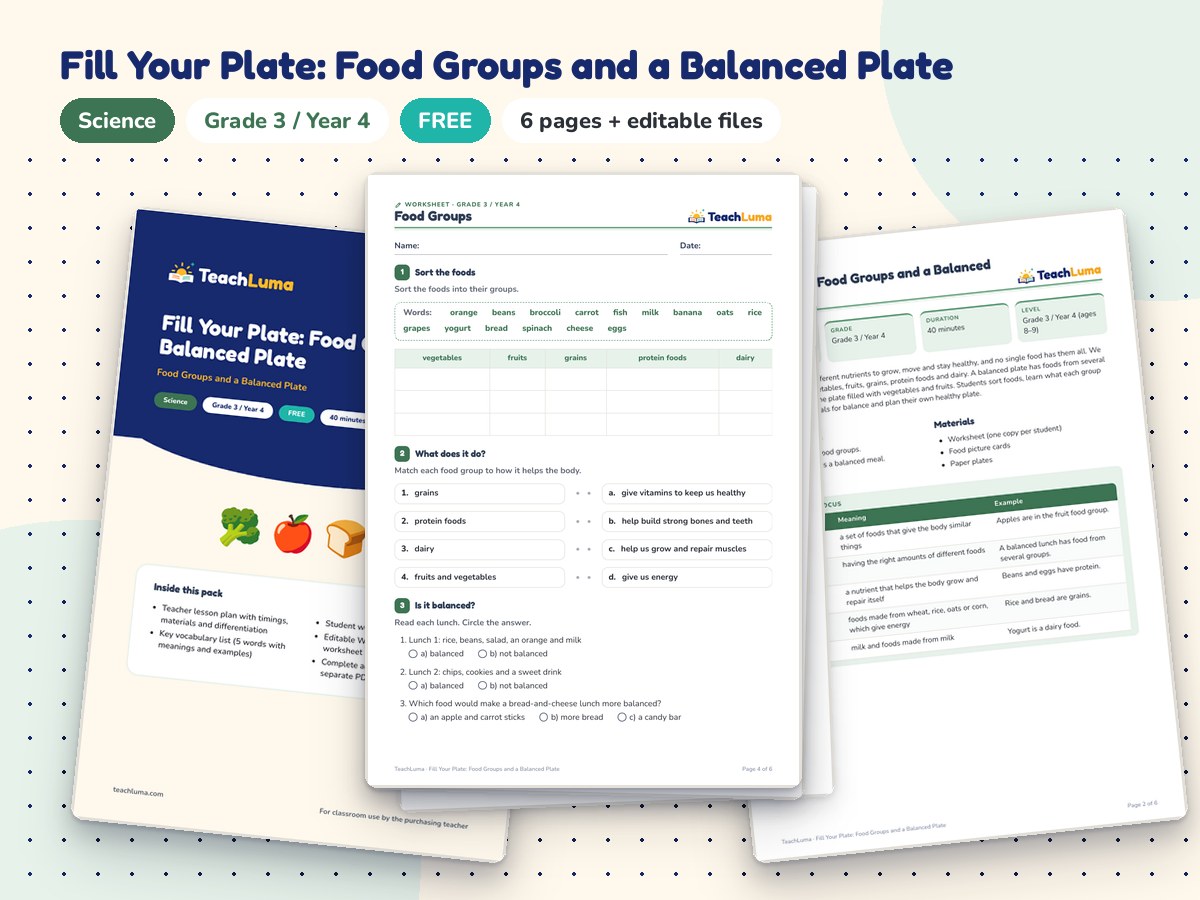
A free Grade 3 science worksheet on food groups. Students learn five food groups (vegetables, fruits, grains, protein foods and dairy), what each group does for the body, sort foods into groups, check whether a lunch is balanced and plan their own balanced plate. Includes a timed lesson plan, an editable Word version and an answer key.

Overview

Our bodies need many different nutrients to grow, move and stay healthy, and no single food has them all. We can group foods into vegetables, fruits, grains, protein foods and dairy. A balanced plate has foods from several groups, with about half the plate filled with vegetables and fruits. Students sort foods, learn what each group gives the body, check meals for balance and plan their own healthy plate.

Resource Details

Subject
Science
Topic
Food Groups and a Balanced Plate
Category
Human Body
File Type
PDF
File Size
223 KB
Published
23 Nov 2026
Downloads
0
Download Free

Free with a TeachLuma account — it takes a minute.

Share:

Looking for something different? Request a Resource.

Grade 3 (ages 8–9) 40 minutes Classifying healthy choices reasoning

Student Task

  • Ask: "What did you eat for breakfast? Which food group is it from?"
  • Teach the five groups and do activities 1 and 2 together.
  • Students complete activities 3 to 5. Answers are in the answer key.

Classroom Use

  • Food group relay: teams sort picture cards onto five plates.
  • Rainbow challenge: how many colors of fruit and vegetables can you eat in a day?
  • Menu makers: plan a balanced class picnic.

Differentiation

Support: use picture cards for each food. Challenge: explain what a food group does for the body.

Answer Key & Assessment

Activities 1 to 4 check sorting and understanding (answer key included). Activity 5 shows planning a balanced meal.

Learning Objectives

  • Sort foods into five food groups.
  • Describe what makes a balanced meal.

Teacher Tips

Be sensitive to different diets and cultures. Explain that people can get protein from beans, eggs, fish, nuts or meat, and calcium from dairy or other foods.

What's Included

  • 6-page printable PDF lesson pack: teacher lesson plan with timings, materials and differentiation
  • Key vocabulary list (5 words with meanings and examples)
  • Student worksheet (5 activities)
  • Editable Word version of the worksheet
  • Complete answer key (also as a separate PDF)

Additional Files


Teacher Reviews

No ratings yet

Be the first teacher to review this resource.

Sign in to review this resource.

Related Resources

Advertisement