Skip to content
Preview
Free ESL Worksheet Grade 10 (Year 11)
No ratings yet

Saying It Gently: Euphemisms and Polite Language

About This Resource

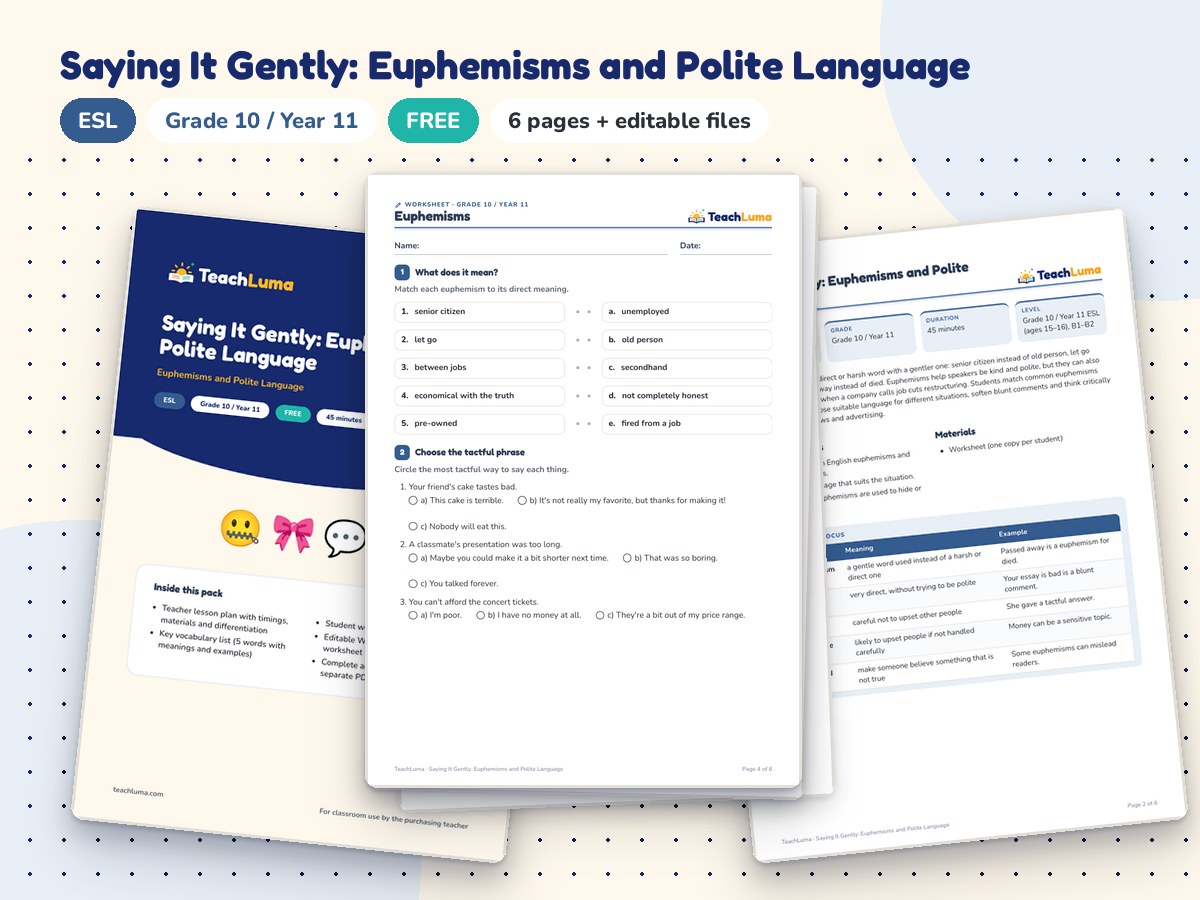
A free Grade 10 ESL vocabulary worksheet on euphemisms, the softer words and phrases English speakers use to talk politely about sensitive topics such as age, money, work and the body. Students match euphemisms to their direct meanings, decide which phrase suits a situation, soften blunt sentences and discuss when euphemisms help and when they hide the truth. Includes a timed lesson plan, an editable Word version and an answer key.

Overview

A euphemism replaces a direct or harsh word with a gentler one: senior citizen instead of old person, let go instead of fired, passed away instead of died. Euphemisms help speakers be kind and polite, but they can also hide unpleasant facts, as when a company calls job cuts restructuring. Students match common euphemisms with their meanings, choose suitable language for different situations, soften blunt comments and think critically about euphemisms in news and advertising.

Resource Details

Subject
ESL
Topic
Euphemisms and Polite Language
Category
Vocabulary
File Type
PDF
File Size
238.1 KB
Published
14 Nov 2026
Downloads
0
Download Free

Free with a TeachLuma account — it takes a minute.

Share:

Looking for something different? Request a Resource.

Grade 10 ESL (ages 15–16), B1–B2 45 minutes Vocabulary pragmatics critical thinking speaking

Student Task

  • Ask: "How would you tell a friend their haircut is bad?" Collect polite and direct versions.
  • Introduce euphemisms, then do activities 1 and 2 together.
  • Students complete activities 3 to 5. Answers are in the answer key.

Classroom Use

  • Softening challenge: teams turn blunt comments into polite ones; the class votes for the kindest.
  • Headline hunt: students find euphemisms in news headlines or job adverts.
  • Culture swap: students share euphemisms from their own languages and compare.

Differentiation

Support: give a two-column list of euphemisms and meanings to use as a reference. Challenge: students analyze a short company announcement and rewrite it in plain language.

Answer Key & Assessment

Activities 1 to 4 check understanding (answer key included). Activity 5 shows whether students can use polite language and think critically about it.

Learning Objectives

  • Understand common English euphemisms and their direct meanings.
  • Choose polite language that suits the situation.
  • Recognize when euphemisms are used to hide or soften facts.

Teacher Tips

Handle sensitive topics such as death gently and keep examples general. Some euphemisms can sound old-fashioned or overly formal; point out which ones are common in everyday speech today. Invite discussion rather than giving one correct view on whether euphemisms are good or bad.

What's Included

  • 6-page printable PDF lesson pack: teacher lesson plan with timings, materials and differentiation
  • Key vocabulary list (5 words with meanings and examples)
  • Student worksheet (5 activities)
  • Editable Word version of the worksheet
  • Complete answer key (also as a separate PDF)

Additional Files


Teacher Reviews

No ratings yet

Be the first teacher to review this resource.

Sign in to review this resource.

Related Resources

Advertisement