Skip to content
Preview
Members Only Science Complete Lesson Pack Grade 3 (Year 4)
No ratings yet

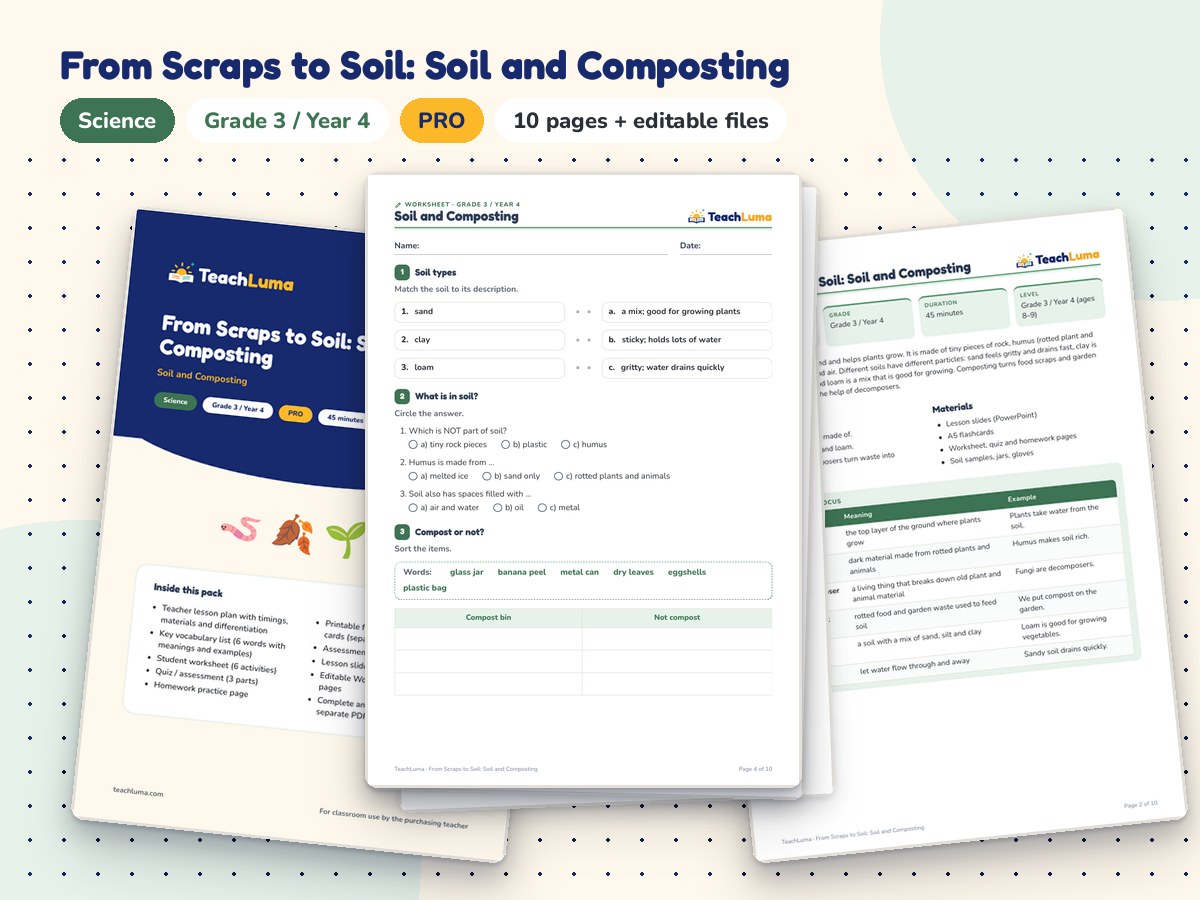
From Scraps to Soil: Soil and Composting

About This Resource

A complete Grade 3 science pack on soil and composting. Students learn what soil is made of (rock pieces, humus, water and air), compare sand, clay and loam, discover how decomposers such as worms, fungi and bacteria break down old plant and animal material, and learn what can and cannot go in a compost bin. Includes slides, a lesson plan, worksheet, quiz, homework, A5 flashcards, a rubric, Word files and answer keys.

Overview

Soil covers much of the land and helps plants grow. It is made of tiny pieces of rock, humus (rotted plant and animal material), water and air. Different soils have different particles: sand feels gritty and drains fast, clay is sticky and holds water, and loam is a mix that is good for growing. Composting turns food scraps and garden waste into rich soil with the help of decomposers.

Resource Details

Subject
Science
Topic
Soil and Composting
Category
Materials & Matter
File Type
PDF
File Size
304.2 KB
Published
21 Nov 2026
Downloads
0

Members Only

Create a free account to download this resource with one of your 3 Free Pro Previews, or upgrade to Teacher Pro (from ฿199/month) for the whole library.

Share:

Looking for something different? Request a Resource.

Grade 3 (ages 8–9) 45 minutes Observing comparing classifying explaining

Learning Objectives

  • Describe what soil is made of.
  • Compare sand, clay and loam.
  • Explain how decomposers turn waste into compost.

How to Use This Resource

  • Show a jar of soil. Ask: "What do you think is in here?"
  • Teach soil parts and soil types with the slides, then do activities 1 and 2 together.
  • Students complete activities 3 to 6. Use the quiz and send the homework page home.

Classroom Activity Ideas

  • Soil shake: shake soil and water in a jar and watch the layers settle.
  • Drainage test: pour water through sand, clay and loam and compare.
  • Class compost: start a small compost bottle and observe it each week.

Differentiation

Support: provide feel cards (gritty, sticky, soft) for soil types. Challenge: design a fair test to compare how much water each soil holds.

Assessment

Use the worksheet and quiz to check understanding. Use the rubric for explanations of composting.

Teacher Tips

Students should wear gloves and wash their hands after touching soil. Use bought potting soil, sand and clay for safe testing.

What's Included

  • 10-page printable PDF lesson pack: teacher lesson plan with timings, materials and differentiation
  • Key vocabulary list (6 words with meanings and examples)
  • Student worksheet (6 activities)
  • Quiz / assessment (3 parts)
  • Homework practice page
  • Printable flashcards: 6 A5 picture cards (separate PDF)
  • Assessment rubric (4 levels)
  • Lesson slides (editable PowerPoint)
  • Editable Word version of all student pages
  • Complete answer key (also as a separate PDF)

Additional Files

  • Lesson Slides (PPTX)
  • Editable Student Pages and Lesson Plan (DOCX)
  • A5 Flashcards (PDF)
  • Answer Key (PDF)

Teacher Reviews

No ratings yet

Be the first teacher to review this resource.

Sign in to review this resource.

Related Resources

Advertisement