Grade 4 Understanding Fractions PowerPoint: Halves, Thirds, and Quarters
Members Only Math PowerPoint Grade 4
No ratings yet

Grade 4 Understanding Fractions PowerPoint: Halves, Thirds, and Quarters

About This Resource

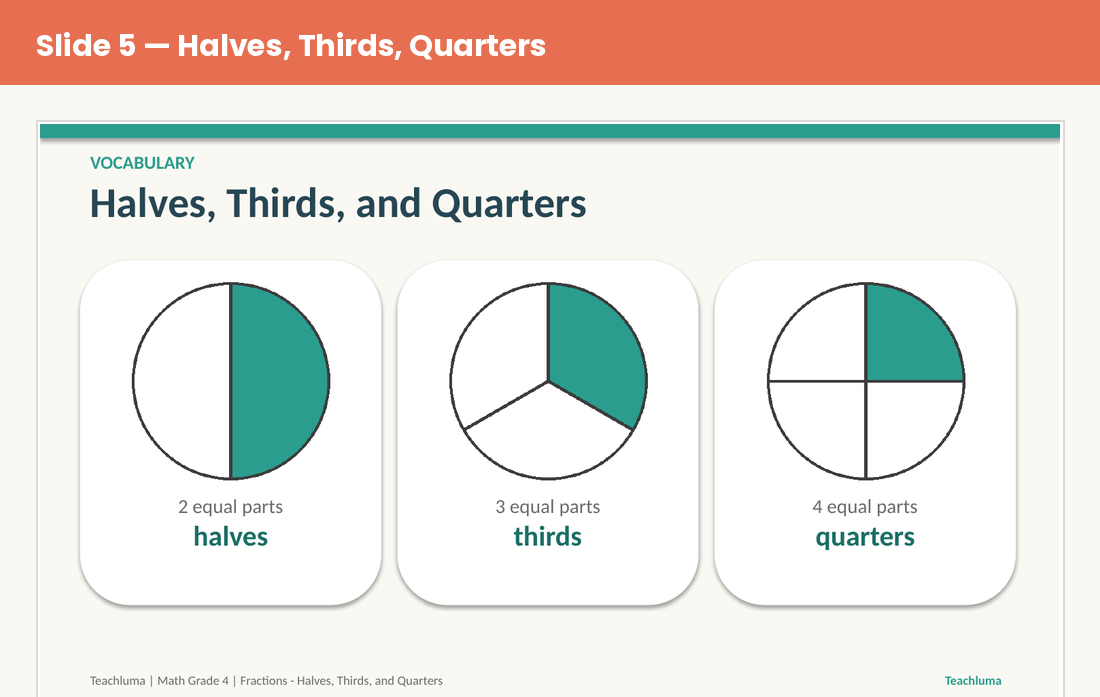
An 11-slide teaching presentation that introduces what a fraction is, why the parts of a whole must be equal, and how to read and write halves, thirds, and quarters — including fractions of a group of objects, not just a single shape. Designed as the direct-teaching backbone of the topic, meant to be shown while the teacher models thinking aloud.

Overview

This presentation moves students from a first, informal idea of a fraction through to reading and writing formal notation. It opens by asking what a fraction is, then spends a full slide on the idea that the parts of a whole must be equal — using a side-by-side comparison of an equally split shape and an unequally split shape, since this is the single idea students most often skip past. It then introduces halves, thirds, and quarters together as a trio so students see the pattern of "more parts, smaller pieces," explains numerator and denominator using a labelled example, includes a teacher-modelling slide with suggested think-aloud language, a guided "shade the shape" practice slide, a slide showing that fractions can describe part of a group of objects (not only part of one shape), and a review slide that shows shapes without giving away the answers.

Resource Details

Subject
Math
Topic
Understanding Fractions
Category
Fractions & Decimals
File Type
PPTX
File Size
78 KB
Published
05 Sep 2026
Downloads
0

Members Only

Upgrade to Teacher Pro (from ฿199/month) to download this resource.

Share:

Lesson Sequence

  • Present the slides in order as the direct-teaching stage of a lesson (see the Halves, Thirds, and Quarters Lesson Plan, which references this PowerPoint by name). Pause on the "parts must be equal" slide and ask students to justify which shape shows a true fraction and which doesn't, rather than telling them. Use the teacher-modelling slide as a script starting point, not a fixed script — adapt the language to your own class. On the guided practice slide, have students shade on mini whiteboards or scrap paper along with you before moving to independent work. The review slide is intentionally unanswered, so use it as a quick formative check by cold-calling or having students show fingers for numerator and denominator.

Classroom Activities

  • After the group-fraction slide, hand out small cups of counters or seeds and have partners physically sort a set into equal groups to act out a fraction the teacher calls out (such as "show me 1/3 of your group"), before returning to the seats to continue the presentation.

Teacher Tips

Don't rush past the "equal parts" comparison slide — it looks like the simplest slide in the deck, but it is the one idea that, if skipped, causes the most confusion later when students try to judge whether a hand-drawn shape on a worksheet is really split into fair shares.

Learning Objectives

  • Students will be able to define a fraction as an equal part of a whole or of a group.
  • Students will be able to explain why unequal parts do not represent a valid fraction.
  • Students will be able to identify and read halves, thirds, and quarters.
  • Students will be able to label the numerator and denominator of a fraction.
  • Students will be able to recognise that a fraction can describe part of a group of objects.

Differentiation

SUPPORT: Keep the vocabulary word bank (fraction, equal parts, numerator, denominator) visible throughout the presentation, and allow students to answer guided-practice questions by pointing or shading rather than speaking the fraction aloud first.
ON-LEVEL: Follow the presentation as designed, pausing at each guided or review slide for a full-class check before continuing.
CHALLENGE: On the group-fraction slide, ask advanced students to predict what a different fraction of the same group would look like (for example, "what would 3/4 of these 8 mangoes look like?") before you reveal it.

Assessment

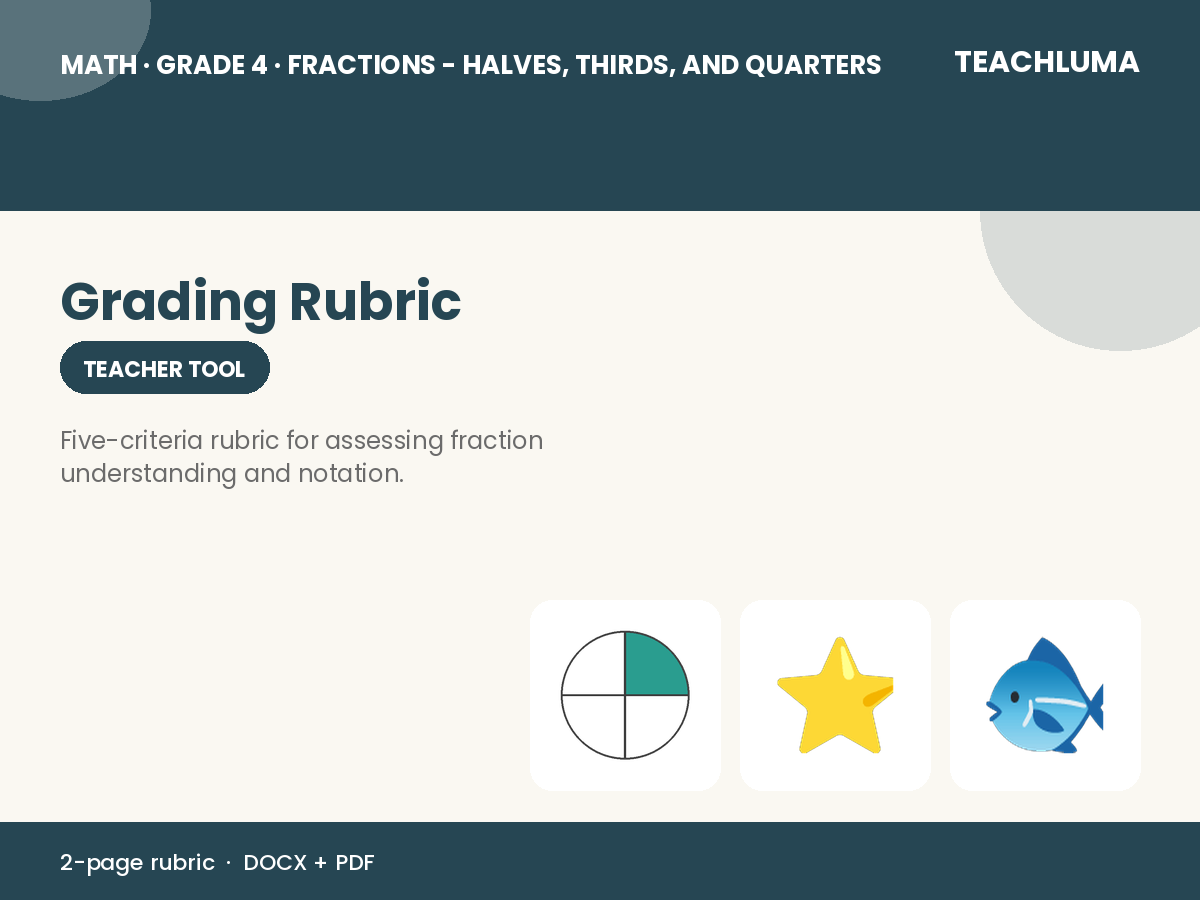
Use informal questioning during the guided practice and review slides as a quick formative check, then assess more formally using the Fraction Practice Worksheet, Fraction Word Problem Worksheet, or Halves, Thirds, and Quarters Quiz, scored with the Grading Rubric.

What's Included

  • 11-slide editable PowerPoint (PPTX)
  • PDF version for viewing or printing as a handout
  • Teacher-modelling slide with suggested dialogue
  • Guided practice and review slides

Additional Files

  • Understanding Fractions.pdf

Teacher Reviews

No ratings yet

Be the first teacher to review this resource.

Sign in to review this resource.

Related Resources

Free Grade 4

Grade 4 Halves, Thirds, and Quarters Grading Rubric

Grading Rubric · Fractions

A five-criteria assessment rubric for the Halves, Thirds, and Quarters topic, scoring stud...

View Resource
Free Grade 4

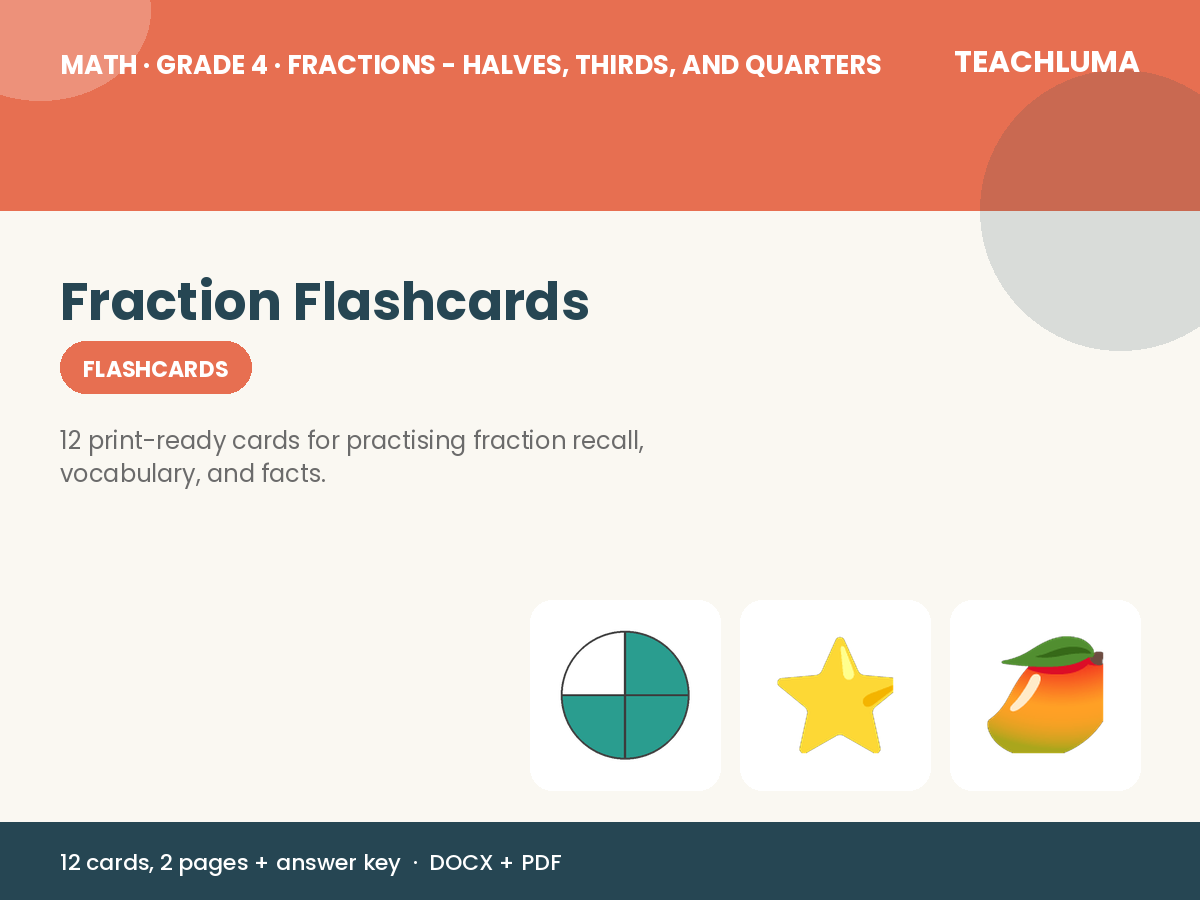
Grade 4 Fraction Flashcards: Halves, Thirds, and Quarters

Flashcards · Fraction

A set of 12 print-and-cut flashcards mixing shaded-shape fraction recall, vocabulary quest...

View Resource
Free Grade 4

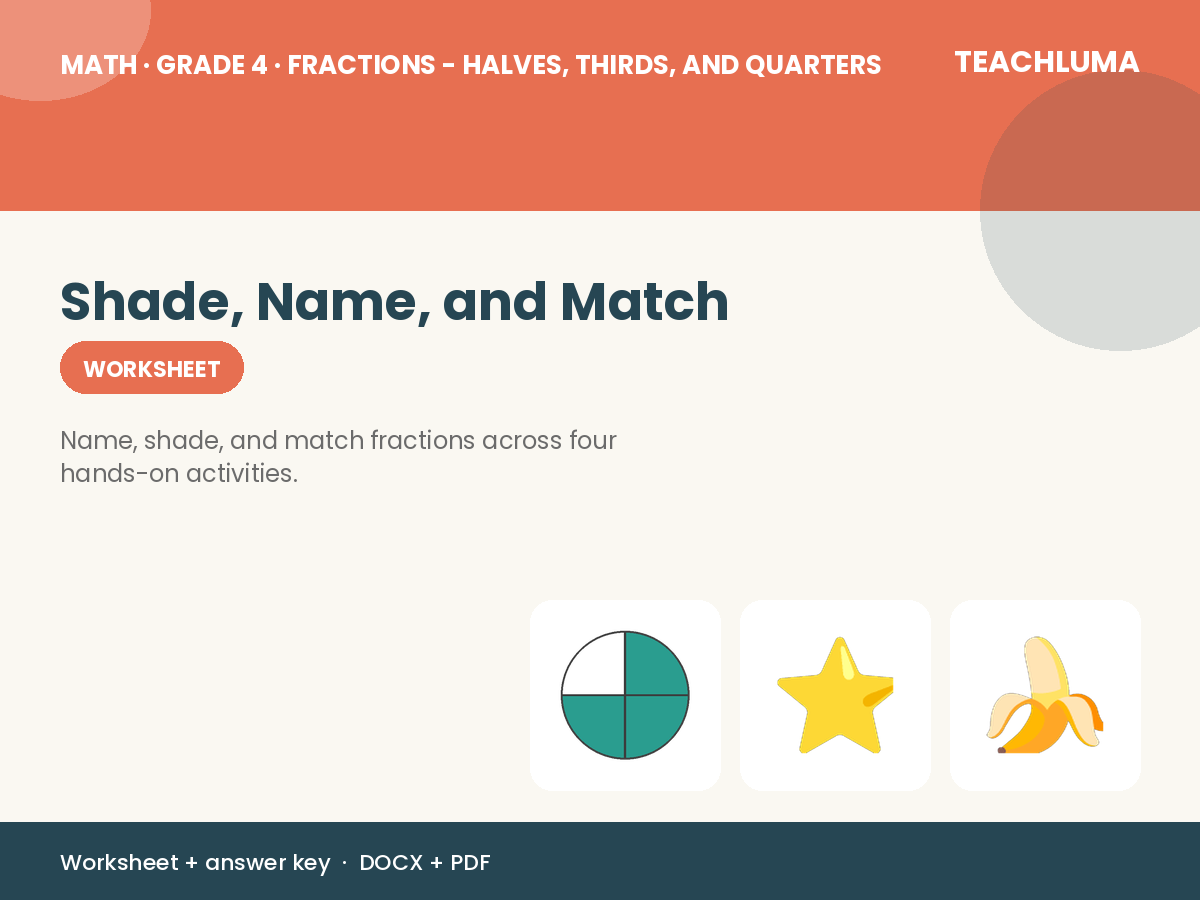
Grade 4 Fractions Worksheet: Shade, Name, and Match

Worksheet · Fractions

A three-page worksheet that has students name fractions from shaded shapes, shade shapes t...

View Resource
Members Grade 4

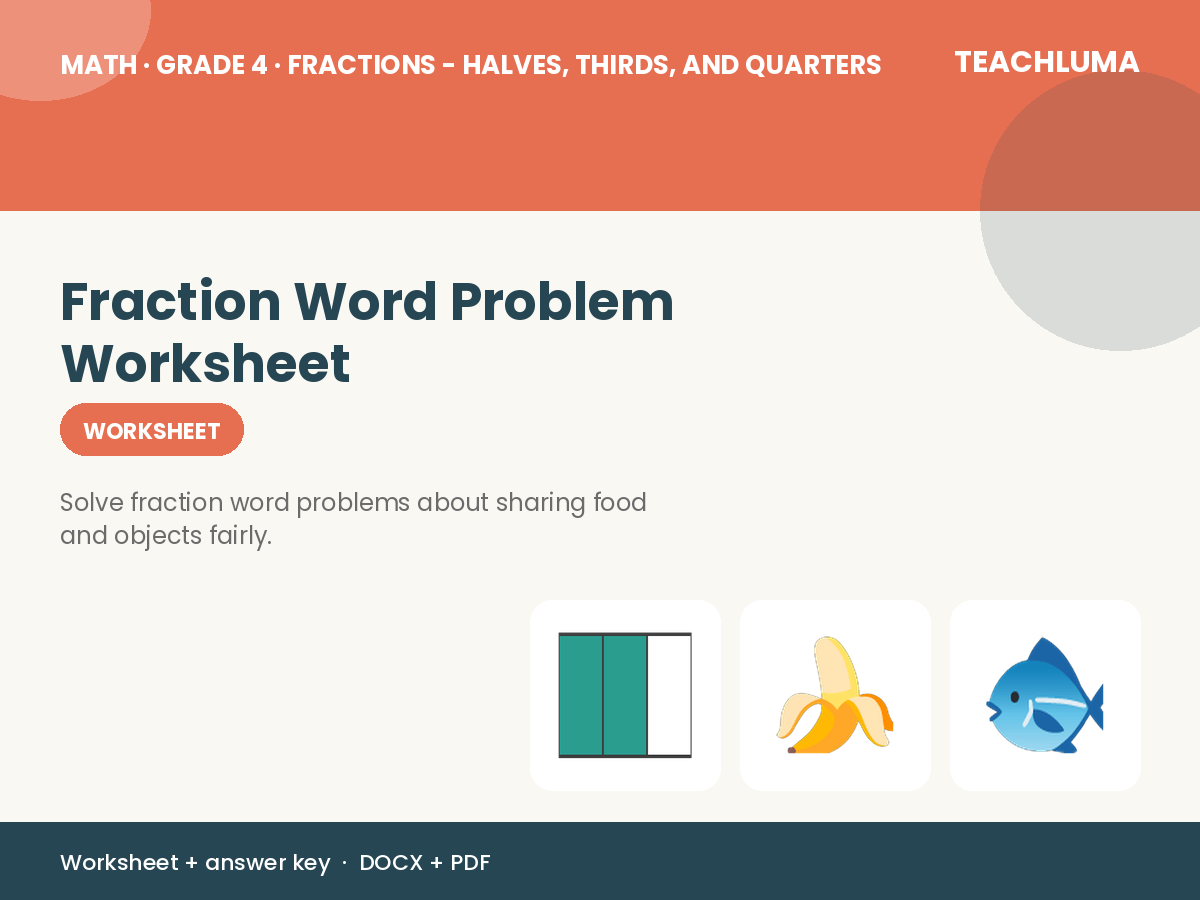
Grade 4 Fraction Word Problem Worksheet: Sharing Food and Objects Fairly

Worksheet · Fraction

A three-page word problem worksheet where students read short stories about sharing food a...

View Resource
Members Grade 4

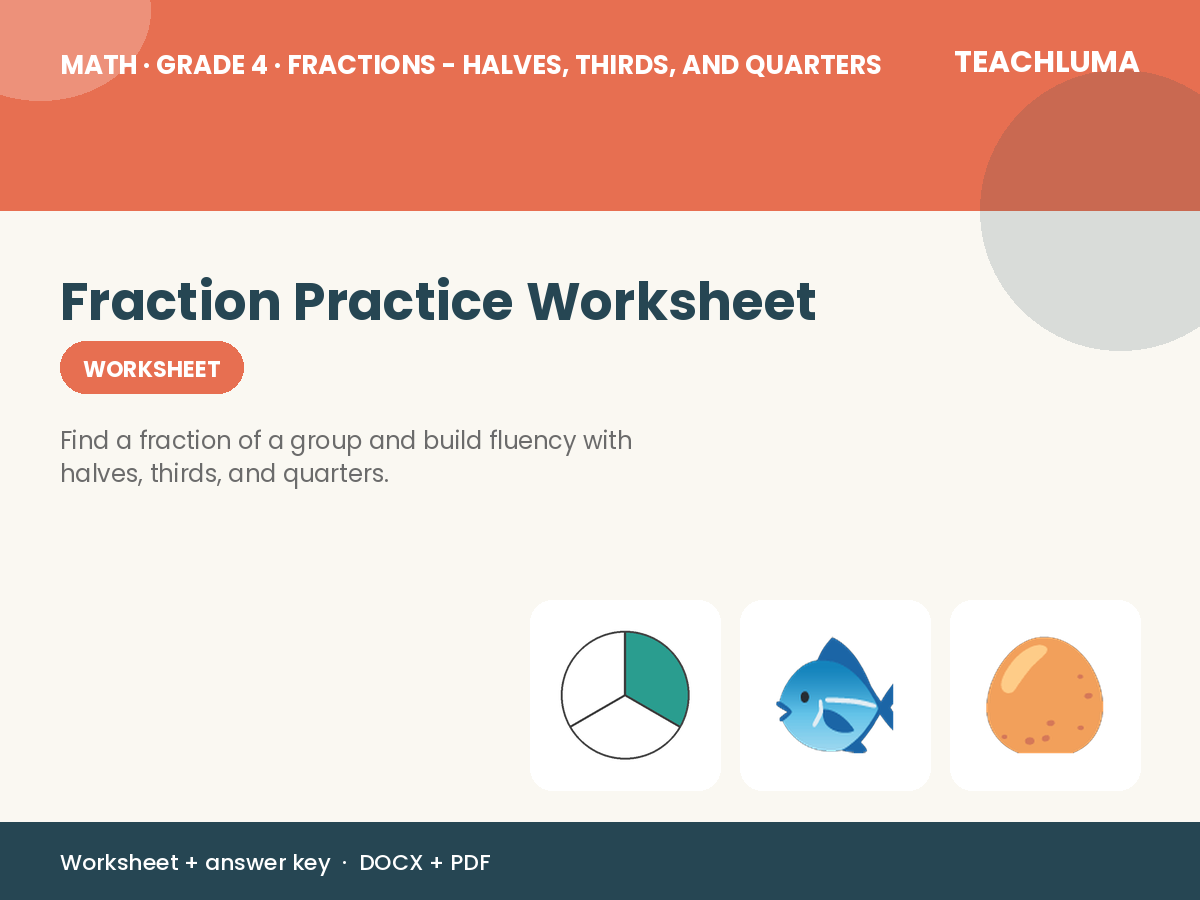
Grade 4 Fraction Practice Worksheet: Fractions of a Group

Worksheet · Fraction

A two-page fluency worksheet focused on finding a fraction of a group of objects, with a l...

View Resource
Free Grade 4

Grade 4 Halves, Thirds, and Quarters Lesson Plan

Lesson Plan · Halves, Thirds, and Quarters

A complete lesson plan for introducing halves, thirds, and quarters to Grade 4 students. I...

View Resource