ESL & English Teaching
How to Teach Phonics to Young Learners
Phonics only works as a reading strategy once students can blend sounds together, not just name individual letters. Many phonics lessons stop at 'this letter makes this sound' and never get to the blending step, which is where the actual reading skill lives.
Practical Advice
Teach letter sounds in small groups that let you build real words quickly — a common order is s, a, t, p, i, n, because after just those six sounds students can already blend words like 'sat', 'pin', and 'tap'. Always say the sound, not the letter name (the sound in 'cat' is /k/, not 'cee') — mixing the two is one of the most common sources of confusion.
Classroom Examples
After introducing s, a, t: write 'sat' on the board and model blending it slowly — /s/ /a/ /t/ — then faster, sat, then ask the class to blend it with you. Move to letting individual students try blending new three-letter combinations of the sounds they know before introducing another new sound.
Activities
- Sound hunt — students find objects in the room starting with the target sound
- Blending slide — move a finger under each letter as you blend, then let students do it
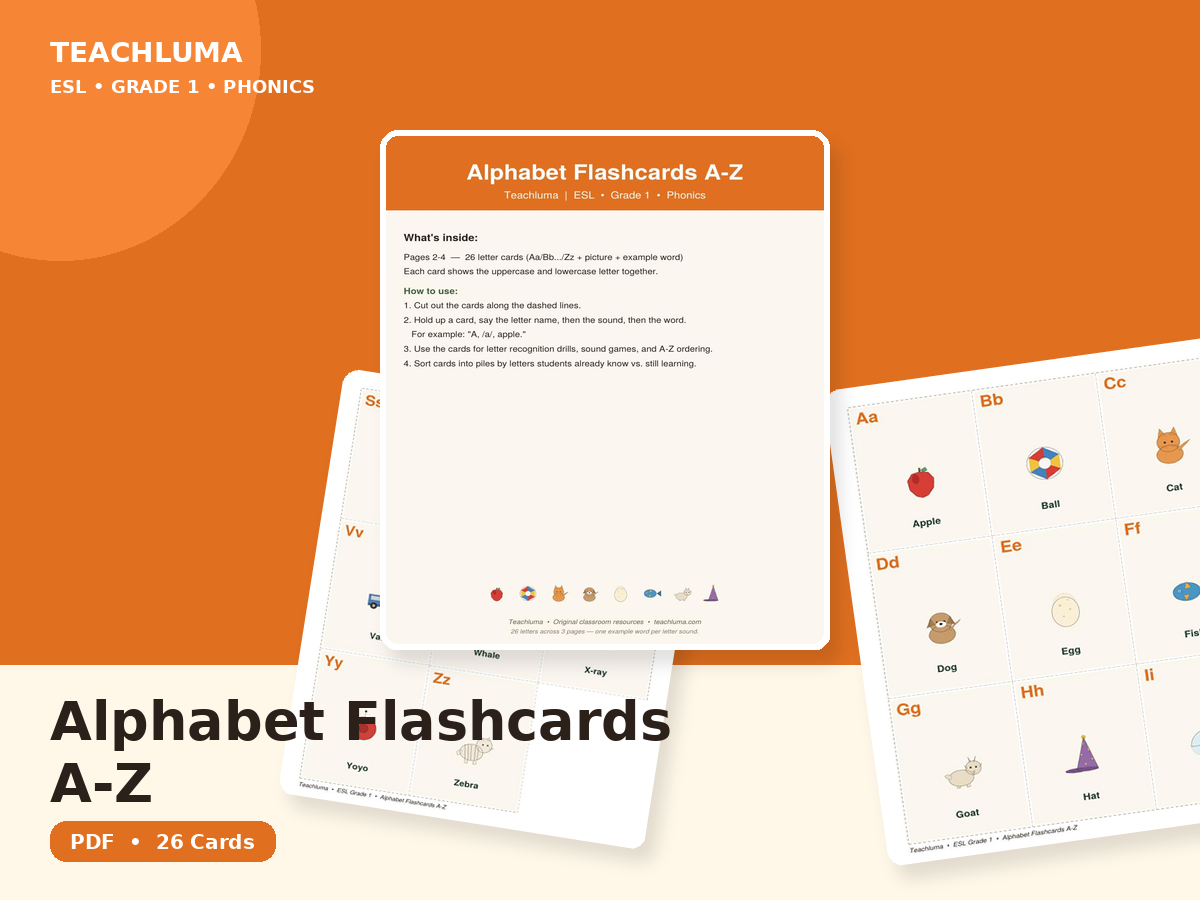
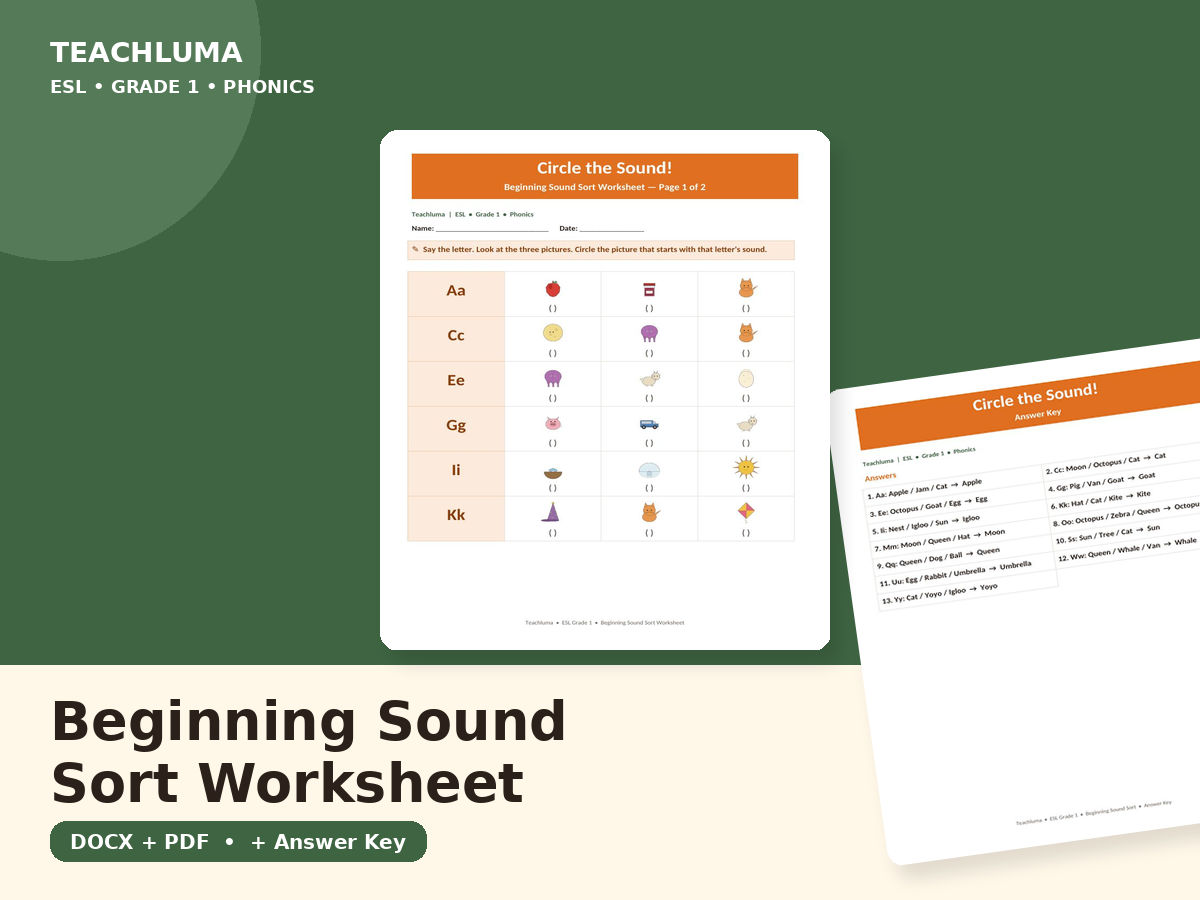
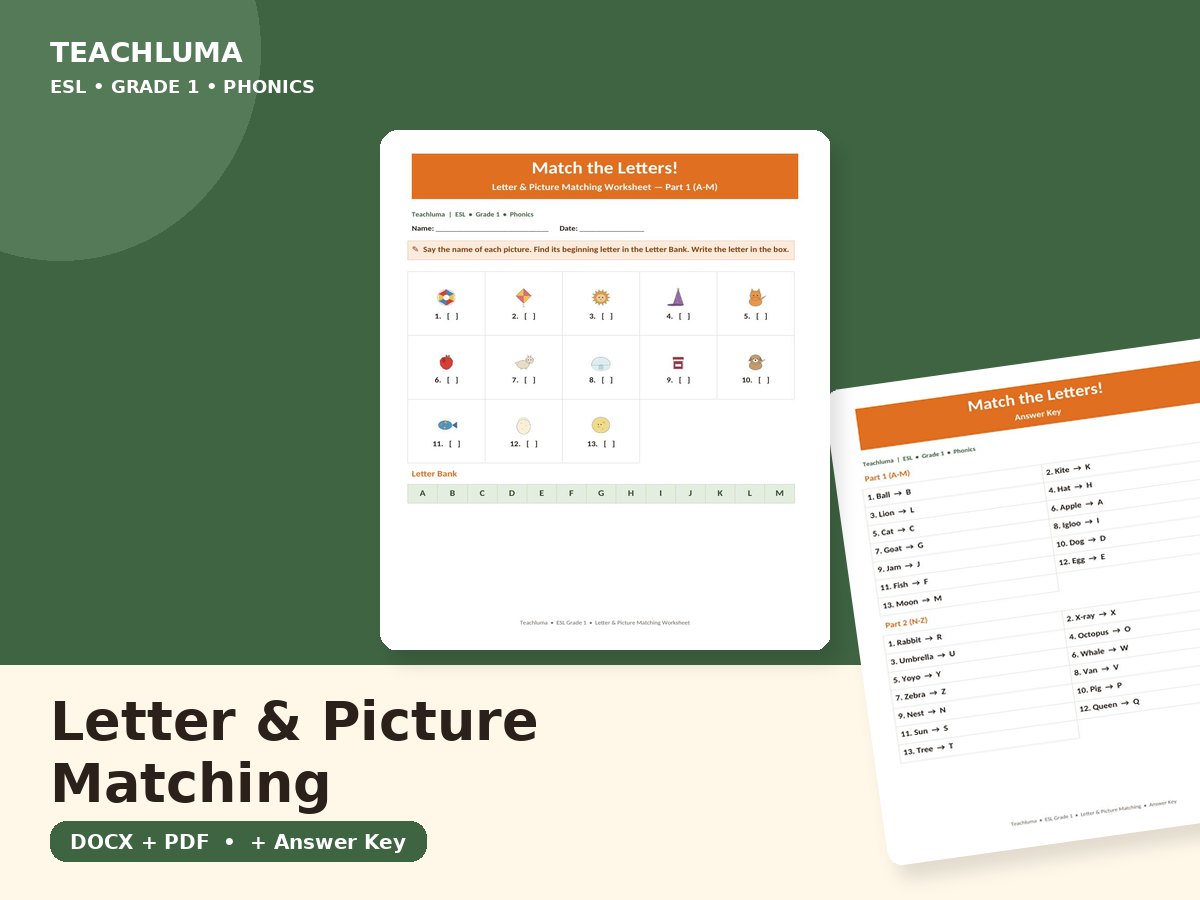
- Sound sorting — sort picture cards by their beginning sound
- Magnetic letters — build and rebuild simple words physically
Common Difficulties
Students often confuse similarly-shaped or similarly-sounding letters (b/d, m/n). Rather than drilling the letters in isolation, keep both letters embedded in real words in every practice activity so students learn to tell them apart by context and use, not just visually.
Differentiation
Students ahead of the group can move to blending four-letter words or simple digraphs (sh, ch). Students who need more time benefit from more oral blending practice (saying the sounds together) before being asked to also read the letters — separate the two skills rather than demanding both at once.
Assessment
Ask a student to blend three or four words built from sounds you've already taught, one at a time, without you modeling first. This tells you whether they can blend independently, which is the real target skill — not whether they can recite the alphabet.
Recommended TeachLuma Resources
Free
Grade 1
Classroom Activity
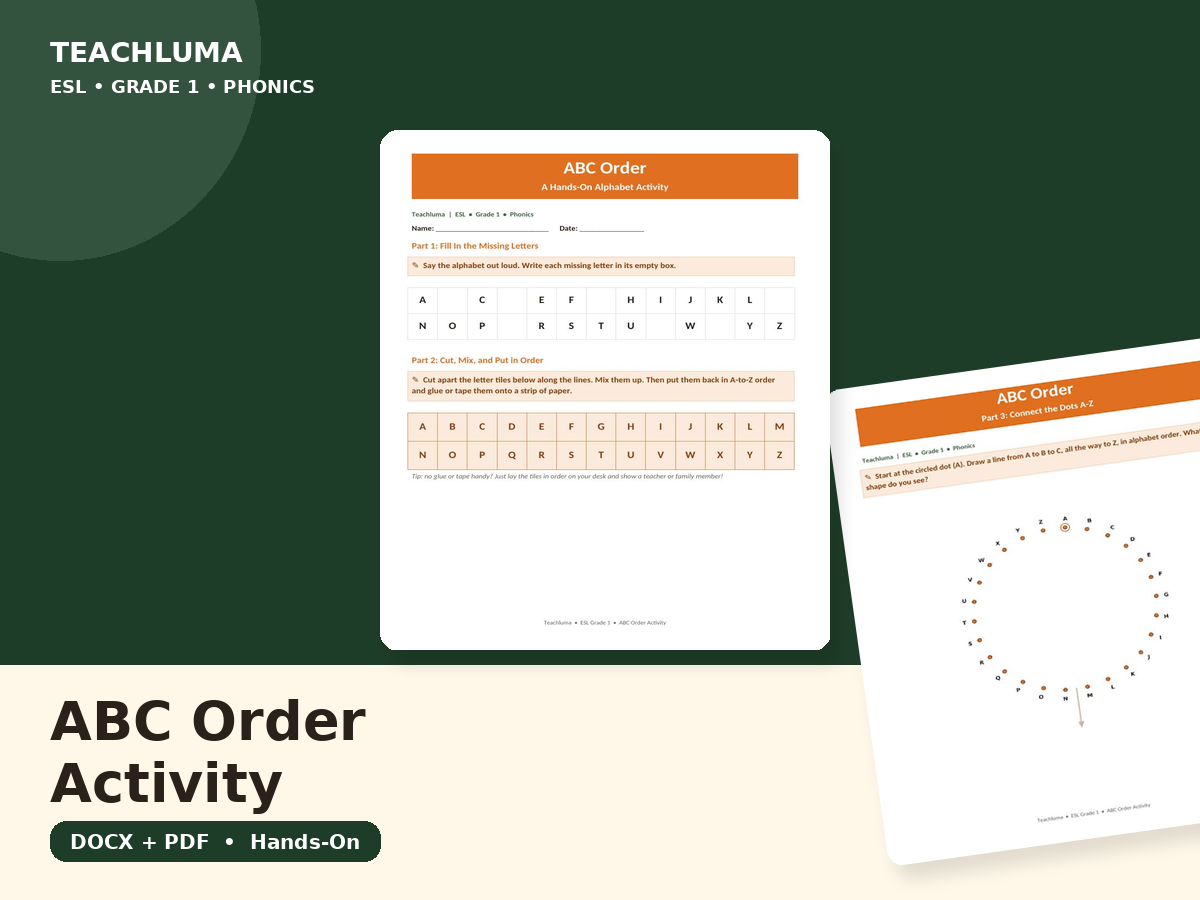
ABC Order Activity
A two-page, three-part hands-on activity: filling in missing letters in the alphabet strip...
View Resource : ABC Order Activity