ESL & English Teaching
How to Teach Vocabulary to Young ESL Learners
Young ESL learners forget new words fast if they only hear them once. The fix isn't more vocabulary — it's a consistent routine that gives each word multiple, varied exposures in the same lesson: hear it, say it, see it, use it.
Practical Advice
Introduce no more than 6-8 new words in a single lesson for young learners — beyond that, recall drops off sharply. Say each word clearly two or three times before asking students to repeat it, and always pair the spoken word with a picture or object rather than a translation, so students build a direct connection between the English word and its meaning.
Repetition across lessons matters more than repetition within one lesson. Bring the same set of words back at the start of the next 2-3 lessons in a quick 2-minute warm-up before moving on to new vocabulary.
Classroom Examples
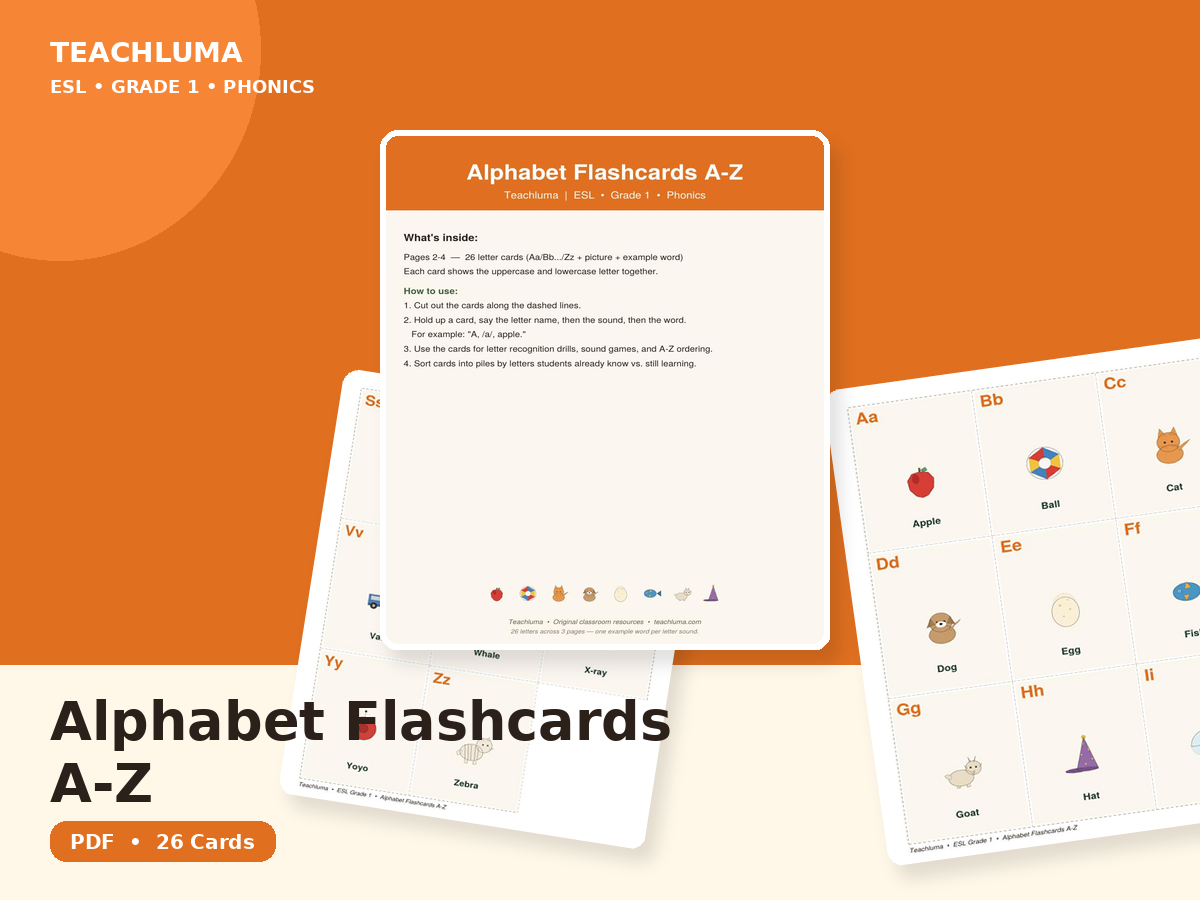
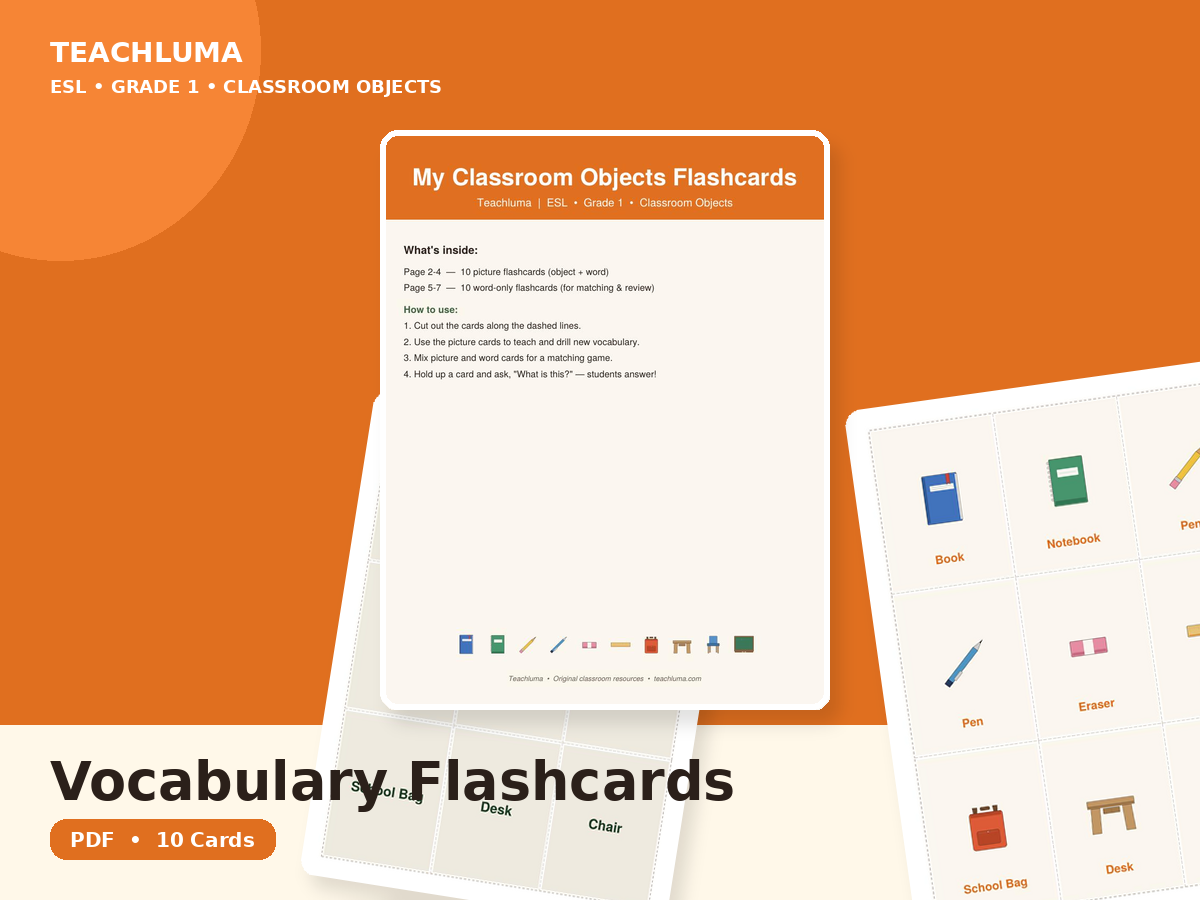
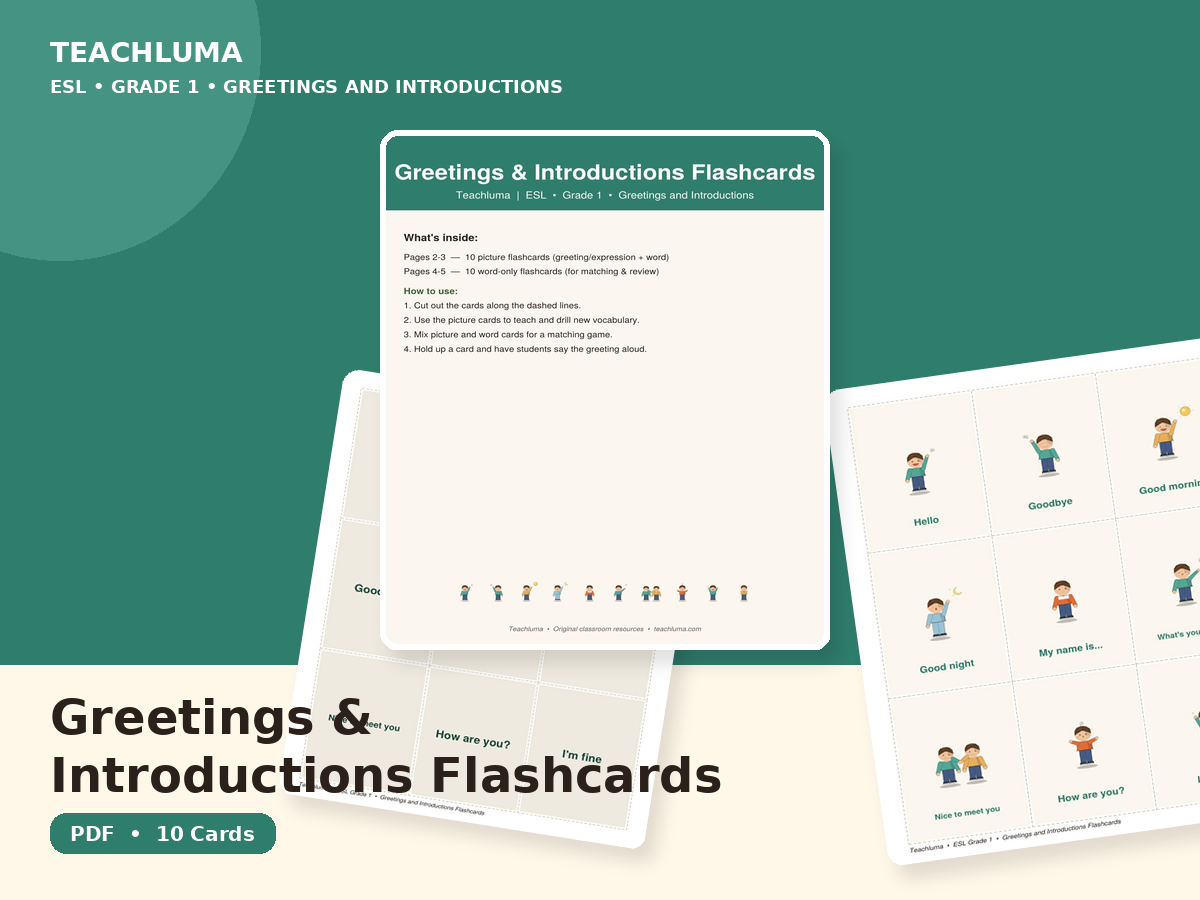
For a set of animal vocabulary: hold up a flashcard and say the word, have the class repeat it together, then individually call on a few students. Next, hide the flashcards and ask 'Where's the elephant?' so students point rather than speak — this checks recognition before you ask for production. Only once most of the class can identify the words do you move to having them say the words unprompted.
Activities
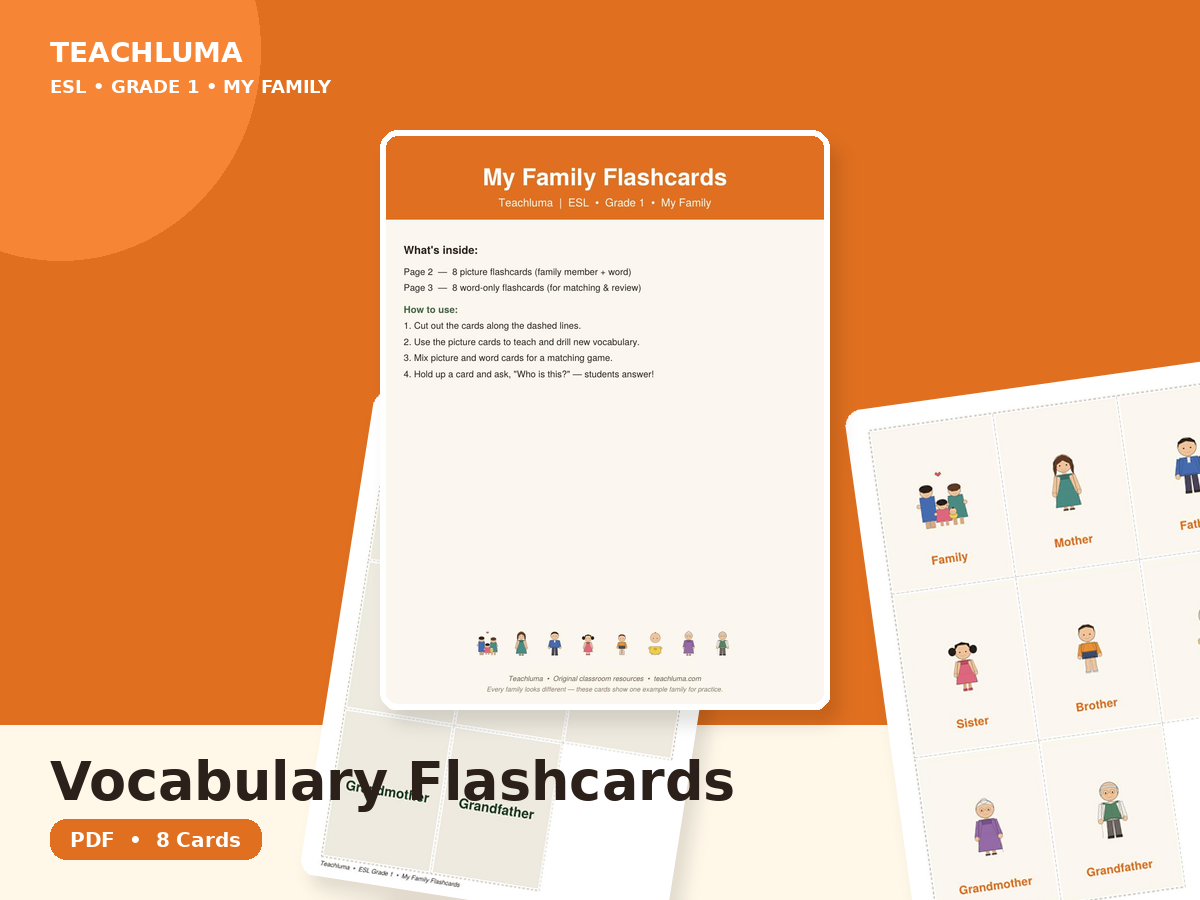
- Point and say — hold up flashcards, students say the word
- Missing card game — remove one card while eyes are closed, students guess which is missing
- TPR actions — assign a physical action to each word and call them out at random
- Pair quiz — one student shows a card, partner says the word
Common Difficulties
Students often recognize a word (can point to the right picture) long before they can produce it unprompted — that gap is normal, not a sign the lesson failed. Don't rush from recognition to production in the same lesson.
Differentiation
For students who pick up vocabulary quickly, ask them to use the new word in a full sentence rather than just naming it. For students who are struggling, drop back to matching — hand them two cards and ask them to point to the one you name, which removes the pressure of speaking.
Assessment
A quick, low-pressure check: hold up each flashcard and have the whole class say the word together (choral response). You'll hear immediately which words are solid and which need another pass, without singling anyone out.
Recommended TeachLuma Resources
Free
Grade 1
Classroom Activity
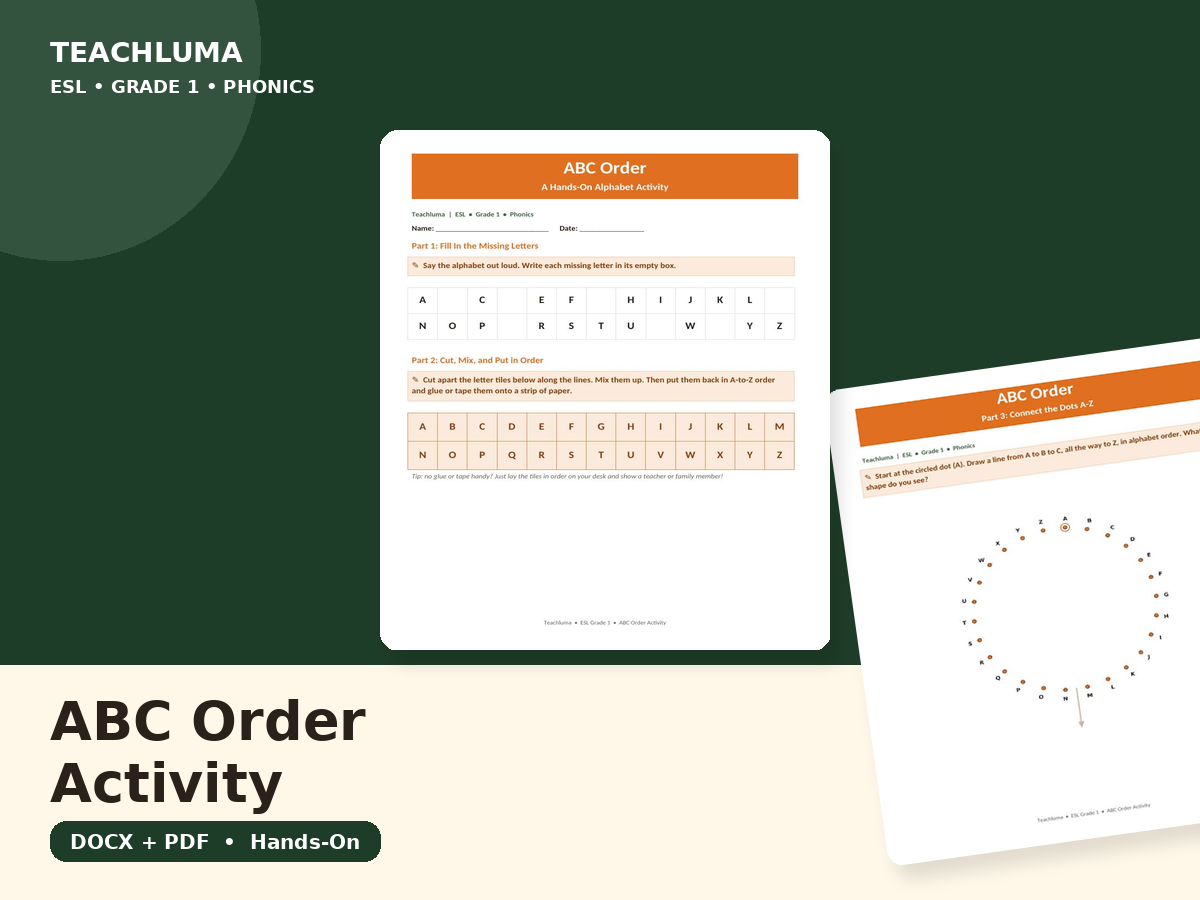
ABC Order Activity
A two-page, three-part hands-on activity: filling in missing letters in the alphabet strip...
View Resource : ABC Order Activity